

Best compound bows for deer hunting in Ireland
Best compound bows for deer hunting in Ireland: none — bowhunting deer is prohibited in the Republic of Ireland. For lawful target archery in 2026, the best starting point is a properly fitted adjustable compound; a target-focused compound suits dedicated club archers, while an inspected used compound is an alternative for buyers who already know their fit.
- The best compound bows for deer hunting are not lawful deer-hunting options in the Republic of Ireland.
- Wildhunter Gunroom's archery guides help you compare compound bow draw weight, fit and equipment.
- Choose an adjustable compound for learning, a target-focused compound for club shooting, or an inspected used bow.
- A deer-hunting licence and landowner permission do not authorise bowhunting deer.
Why this matters
A hunting label describes a bow's intended market, not permission to use it against deer in Ireland. Overseas reviews often discuss bowhunting under rules that do not apply in the Republic of Ireland. Settle the legal question before comparing equipment.
Section 34 of the Wildlife Act prohibits hunting wild birds or wild mammals using an arrow, dart or spear, among other prohibited methods. A compound bow does not escape that restriction because it has cams, high draw weight or a hunting specification. Neither landowner permission nor a deer-hunting licence overrides the prohibited method.
For a 2026 purchase intended for archery practice, start with how to choose a compound bow draw weight. If your actual objective is Irish deer stalking, a compound bow is the wrong purchase for that purpose.
This guide therefore ranks compound bow configurations for lawful target archery, not weapons for taking Irish deer. The recommendations distinguish learning, dedicated club use and an informed second-hand purchase without treating an overseas hunting description as an Irish legal approval.
What makes the best compound bow for your lawful use?
The best compound bow fits the archer and the activity. A demanding bow with an impressive specification is a poor choice if you cannot draw, hold and let it down under control.
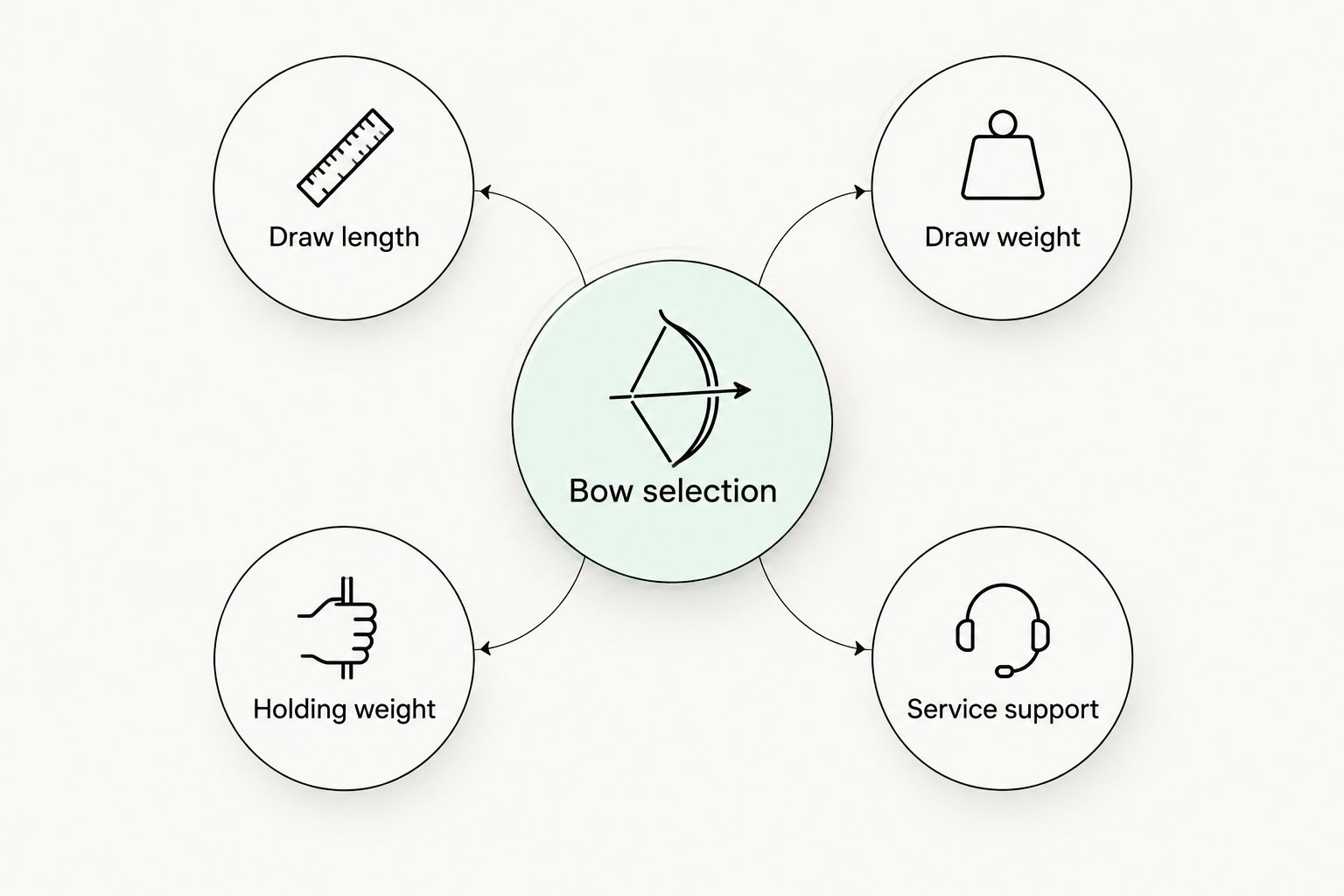
Use these criteria before comparing configurations:
- Draw length: The bow must support your fitted draw length. Check the actual adjustment mechanism, not just the range printed in a listing.
- Draw weight: Choose a setting you can control throughout the draw cycle. Peak weight alone does not describe how demanding the bow feels.
- Holding weight: Let-off reduces the force held at full draw, but the bow still has to be drawn and let down safely.
- Adjustment: Establish whether changes need different modules, additional parts or a bow press. Adjustment range and adjustment convenience are separate questions.
- Service support: Check access to suitable strings, cables, modules and competent servicing before committing to a particular bow.
- Condition: Inspect limbs, cams, strings, cables and mounting points. On a used bow, condition takes priority over its original specification.
Bow selection starts with fit, then control, then support. Do not reverse that order because a listing leads with arrow speed.
Compound bow options at a glance
These are buying routes, not a ranking of individual models. Each option serves a different archer, and none is recommended for deer hunting in the Republic of Ireland.
| Ranked option | Best for | Standout characteristic | Key limitation | Irish deer-hunting verdict |
|---|---|---|---|---|
| Adjustable compound | Learning and establishing a reliable fit | Draw-length and draw-weight adjustment | Adjustment limits and methods differ between bows | Skip for deer hunting |
| Target-focused compound | Dedicated club and target practice | Configuration intended for target shooting | Still requires individual fitting and suitable accessories | Skip for deer hunting |
| Inspected used compound | Experienced buyers with an established fit | Selection based on known requirements and condition | Hidden damage, missing modules or unsupported parts | Skip for deer hunting |
The default 2026 recommendation is the adjustable compound for target practice. Move away from that default only when your fitted requirements and intended shooting justify a different configuration.
1. Adjustable compound: best compound bow for learning target archery
An adjustable compound lets you select draw length and draw weight within the manufacturer's specified limits. That makes it a sensible starting configuration when you are establishing technique rather than replacing a bow whose fit you already understand.
Adjustment does not mean universal fit. Check handedness, the supported draw-length range and the procedure for changing settings before treating a bow as suitable.
Adjustable compound pros:
- Provides a route to establishing fit without choosing a fixed configuration immediately.
- Supports changes in draw weight within the bow's documented range.
- Lets your purchase prioritise controllability rather than an overseas hunting specification.
- Gives you clear questions to ask about modules, limb settings and servicing.
Adjustable compound cons:
- The available range does not guarantee that the bow fits every archer.
- Some adjustments require equipment or parts beyond a simple setting change.
- A broad adjustment range says nothing by itself about condition or shooting comfort.
Best for: New compound archers and returning archers who need their fit checked.
Ask a competent archery technician or coach to confirm the setup. Your draw length, release aid and anchor position interact; choosing each independently creates avoidable fitting problems. You also need arrows selected for the finished setup, not simply arrows described as suitable for compounds.
Wildhunter Gunroom's compound bow guides are a useful starting point for understanding those buying terms. Treat the individual bow's instructions and an in-person fitting assessment as the basis for adjustment.
Verdict: Buy for target archery after fitting; skip for Irish deer hunting.
2. Target-focused compound: best compound bow for dedicated club practice
A target-focused compound is the relevant category when your main activity is organised target archery. Choose it around your fitted requirements, the discipline you intend to shoot and the equipment rules that apply at your club or competition.
Do not assume that a target designation guarantees comfortable handling. You still need to assess the complete bow with its intended sight, rest and stabilisation equipment.
Target-focused compound pros:
- Keeps the buying decision aligned with target practice rather than hunting claims.
- Supports a deliberate equipment choice once your draw length and technique are established.
- Allows accessories to be selected around a defined target discipline.
- Gives an experienced archer a clear reason to assess handling beyond basic adjustability.
Target-focused compound cons:
- A specialised configuration is not a substitute for coaching or correct fit.
- Accessory compatibility and discipline rules need checking separately.
- A bow selected for one target discipline is not automatically suitable for another.
Best for: Club archers who know their fitted requirements and intended discipline.
Before purchasing in 2026, establish what is included and what remains to be selected. A bare bow and an equipped package are different propositions, but neither guarantees that the release aid, arrows or sight suit you.
Try the complete configuration under appropriate supervision where possible. Balance and clearance matter in use; a specification sheet cannot establish how comfortably you handle the finished bow.
Verdict: Buy for a defined target discipline after fitting; skip for Irish deer hunting.
3. Inspected used compound: best compound bow for experienced buyers
An inspected used compound is a buying route for an archer who already knows the required draw length, handedness and manageable draw weight. The decision depends on condition, available adjustments and access to replacement parts.
The word inspected matters. A bow that looks clean can still require professional assessment, and an attractive specification does not establish its service history.
Inspected used compound pros:
- Lets an experienced buyer assess equipment against an established personal fit.
- Encourages a condition-led decision rather than a comparison of promotional claims.
- Provides an alternative to buying a new configuration when the required parts and support are confirmed.
Inspected used compound cons:
- Dry-fire history and concealed damage are not reliably established from photographs.
- Missing draw-length modules can prevent correct fitting.
- Strings, cables and servicing requirements need assessment before use.
Best for: Experienced compound archers who can arrange a competent inspection.
Ask about previous damage, servicing and any changes to the bow. Confirm that the supplied modules suit your required setting and that replacements remain obtainable. Do not accept an undocumented adjustment or an assurance that the bow fits everyone.
Verdict: Hold until condition, fit and support are confirmed; skip for Irish deer hunting.
How the options are ranked
The order follows suitability for the stated target-archery use case: adjustable equipment for establishing fit, target-focused equipment for a defined discipline, and used equipment for an informed buyer. Draw length, controllable draw weight, adjustment requirements, service support and condition determine the recommendation.
There is no hunting-performance ranking here. A technically capable bow is still an unsuitable recommendation for a prohibited activity.
What to check before buying in 2026
Confirm the intended activity
Write down whether the bow is for supervised learning, club target shooting or another lawful archery activity. That answer determines the relevant equipment and venue requirements. Do not describe an Irish deer-hunting purchase as target equipment while retaining the same intended use.
Wildhunter Gunroom serves shooting and archery customers, but the category name on a retailer's site does not establish permission to hunt a particular species.
Confirm fit and handedness
Have your draw length assessed using the release aid and technique you intend to use. Confirm handedness before ordering, and discuss eye dominance with your coach if you are unsure which configuration suits you.
A bow that is adjustable in principle still needs the right parts and settings. Check those details for the exact bow rather than assuming they apply across a manufacturer's range.
Confirm the complete equipment list
Establish whether the purchase includes a sight, arrow rest, release aid, arrows and transport protection. Assess each item for compatibility instead of treating a package description as a fitting guarantee.
For target practice, use a suitable arrow-stopping target and a safe shooting arrangement approved by the venue. A paper target face is an aiming surface, not a backstop.
Confirm condition and servicing
Inspect strings and cables for damage and have any concerns assessed before shooting. Follow the manufacturer's maintenance instructions; compound-bow work involving stored limb tension belongs with someone equipped and competent to perform it.
Never dry-fire a compound bow. If a bow has been dry-fired or damaged, stop using it until a competent technician has assessed it.
Which compound bow should you choose?
Choose a fitted adjustable compound if you want to start lawful target archery in 2026. It gives you a clear route to selecting manageable settings without pretending that a hunting label answers the fitting question.
Choose a target-focused compound when you already know your discipline and fit. Consider a used bow only when inspection and parts support are settled before the purchase.
For deer hunting in the Republic of Ireland, choose none of these. Check current official deer-licensing requirements with the National Parks and Wildlife Service, and firearms requirements with An Garda Síochána, rather than importing advice from an overseas bowhunting guide.
FAQ
What's the best compound bow for deer hunting in Ireland?
No compound bow is a lawful choice for deer hunting in the Republic of Ireland. The Wildlife Act prohibits hunting wild mammals using an arrow, so bow specifications do not resolve the legal restriction.
Can I bowhunt deer if I have a deer-hunting licence?
A deer-hunting licence does not authorise hunting deer with a bow in the Republic of Ireland. Licensing and prohibited hunting methods are separate requirements, and landowner permission does not override the restriction.
What's the best compound bow for a beginner doing target archery?
A properly fitted adjustable compound is the best starting configuration for a beginner doing target archery. Confirm draw length, manageable draw weight, handedness and the adjustment procedure before purchasing.
Is a target compound better than a hunting compound for club shooting?
A target-focused compound is the more relevant category for dedicated club target shooting. The individual bow still needs to fit you and comply with the rules of your intended discipline.
How much draw weight do I need for deer hunting in Ireland?
No draw-weight setting makes bowhunting deer lawful in the Republic of Ireland. For target archery, choose draw weight according to controlled handling and correct fit, not an overseas hunting requirement.
Is buying a second-hand compound bow a good idea?
A second-hand compound bow is an option for an experienced buyer after a competent inspection. Confirm condition, suitable draw-length modules and replacement-parts support before using it.
Can a deer-shaped paper target stop compound-bow arrows?
A paper target cannot stop compound-bow arrows. Use it only as a target face with an appropriate arrow-stopping target and a safe shooting arrangement.
One last thing
The force you hold at full draw is not the force you must pull through the draw cycle. Let-off changes holding weight; it does not remove the need to control the draw and let-down.
For your 2026 shortlist, make correct fit a purchase condition rather than an adjustment you hope to resolve afterwards. Wildhunter Gunroom's compound bow guidance belongs in a target-archery buying decision, not as permission to bowhunt Irish deer.