

Hunting Traps and Snares: Best Choices for 2026
Best overall hunting traps and snares approach for pest control in 2026: choose a species-appropriate trap only after checking the site, welfare requirements and current Irish rules. Best for selective live capture: a cage trap. Best for indoor rodent control: an enclosed break-back trap. Snares are not the default choice.
- For hunting traps and snares in 2026, identify the species and check current Irish rules before choosing equipment.
- A cage trap suits selective live capture only when lawful checking and animal-care arrangements are in place.
- An enclosed break-back trap is the simpler choice for indoor rodent control where live capture is unnecessary.
- Wildhunter Gunroom serves licensed Irish hunters with shooting equipment; its supplied catalogue does not establish trap or snare availability.
Why this matters
A trap is not suitable just because it fits the space or appears effective. The species, location, access by people or other animals, and what happens after capture all affect the decision. In 2026, check the current rules for the species and method before buying or setting anything; do not treat a product description as legal guidance.
If you have not confirmed which animal is causing the problem, start with evidence rather than a device. Wildhunter Gunroom's guide to trail cameras for deer and pest monitoring covers a monitoring option. A camera does not capture an animal, but it can help you decide whether a trap is appropriate at all.
This is a method comparison, not a ranked list of stocked trap products. The supplied Wildhunter Gunroom catalogue identifies shooting equipment and related guides, but no specific pest trap or snare for this article. The recommendations below concern trap types; check any actual device, its instructions and its legal status separately.
What makes the best hunting traps and snares?
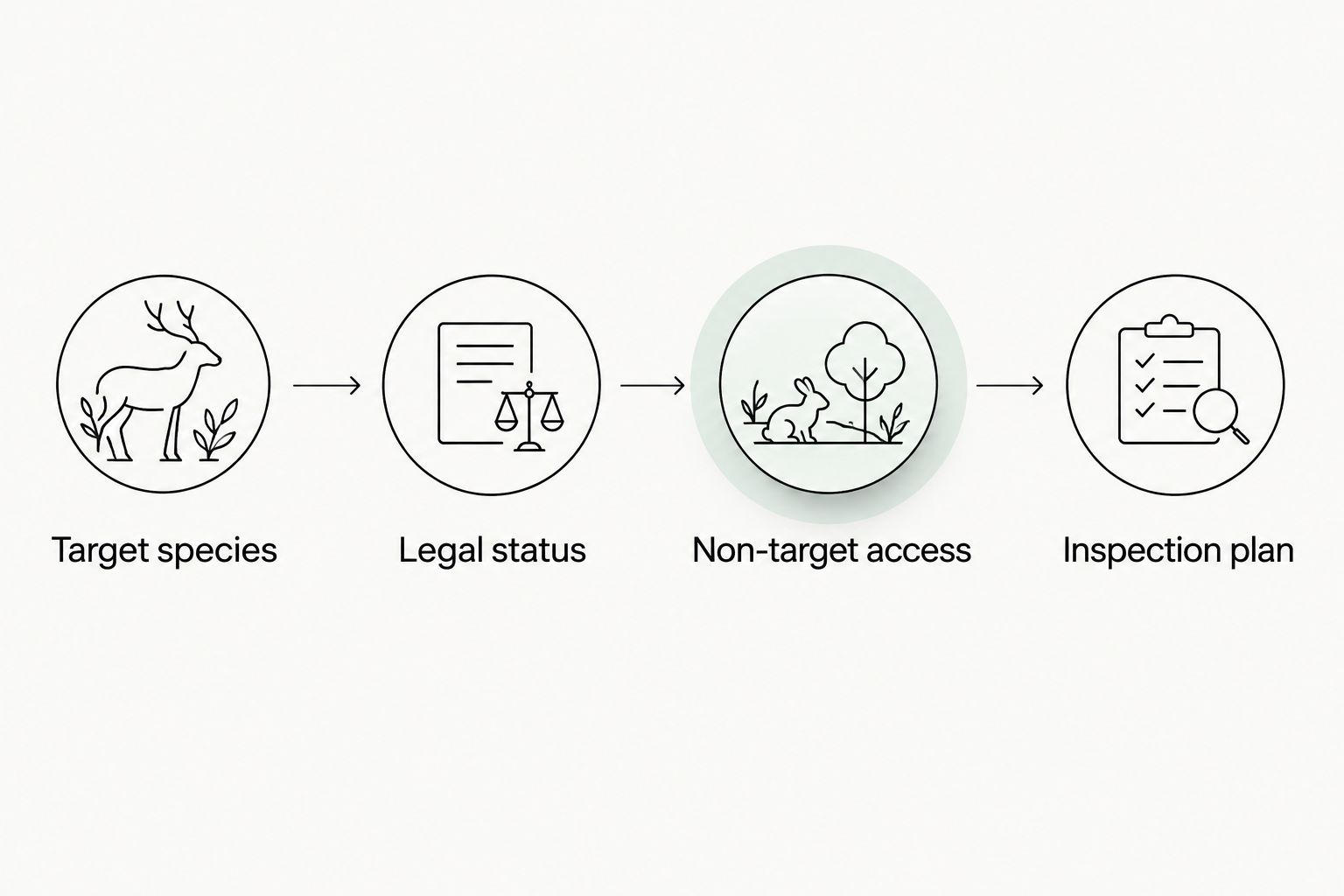
Use these criteria before comparing devices. A method that fails the legal or welfare check does not become a better choice because it is convenient.
- Target species: Confirm the animal first. A device selected for an assumed species is the wrong starting point.
- Legal status: Check the current Irish requirements for the species, location and capture method. Rules and permissions are not interchangeable.
- Non-target access: Consider pets, livestock, wildlife and people who can reach the site. A selective plan accounts for them before placement.
- Inspection and response: Have a lawful, practical plan to inspect the device and deal with an animal immediately after capture. If you cannot do that, do not use a live-capture device.
- Welfare and outcome: Decide whether live capture is necessary and what lawful action follows. Capture without an outcome plan creates a problem rather than solving one.
- Site fit: Indoor access, weather exposure and who controls the land affect which methods can be considered.
These are decision criteria, not instructions for setting a trap. In 2026, use the device manufacturer's guidance and current official requirements for any method you have established is lawful.
Hunting traps and snares at a glance
| Option | Best for | Standout feature | Key limitation |
|---|---|---|---|
| Cage trap | Selective live capture at a suitable site | Captures without an immediate kill | Requires an inspection and lawful post-capture plan |
| Enclosed break-back trap | Indoor rodent control without live capture | Housing limits access to the mechanism | Incorrect device choice or access by non-target animals defeats its purpose |
| Multi-catch live trap | Indoor rodent sites with an established inspection routine | Accommodates a live-capture approach | Multiple captures increase the importance of prompt inspection and response |
| Snare | Review only after specific legal and welfare checks | A distinct capture method | Not a general-purpose substitute for the options above |
The default for an undecided reader is not to buy a snare. Identify the animal and site first. Choose an enclosed break-back device for an appropriate indoor rodent problem, or consider a cage trap only when selective live capture and follow-up are both workable.
1. Cage trap: best hunting trap for selective live capture
A cage trap holds an animal alive until someone checks it. That makes it a conditional choice where species identification, selective capture and a lawful outcome matter more than simply placing a device. A cage trap is not a set-and-forget answer to pest activity on land you rarely visit.
Cage trap pros:
- Allows the captured animal to be identified before the next action.
- Supports a live-capture plan where that method is lawful and suitable.
- Makes the follow-up decision explicit before equipment is chosen.
Cage trap cons:
- Requires a workable inspection and response plan.
- Non-target animals can still enter; selectivity is not guaranteed by the word cage.
- Capture does not itself establish permission to move, release or otherwise deal with an animal.
Cage trap best for: A site where you have confirmed the target species, the legal position and who will respond to a capture. Before choosing a model, establish who controls the site and whether people or other animals can access it. If the post-capture decision is unclear, hold rather than buying a trap and working it out later.
For a licensed hunter assessing a wider pest-control problem, Wildhunter Gunroom's pest-control gear guide for farmers dealing with foxes is a related equipment guide. It does not replace the separate checks needed for trapping.
Verdict: Hold until the legal, inspection and post-capture plan is settled; then choose a suitable cage trap.
2. Enclosed break-back trap: best indoor rodent-control option
An enclosed break-back trap places a kill mechanism inside a housing. For an identified indoor rodent problem, it offers a clearer choice than live capture when there is no reason or lawful plan to keep the animal alive. The enclosure is a design feature, not proof that every pet, child or non-target animal is protected in every location.
Enclosed break-back trap pros:
- Gives you a defined alternative to live capture for indoor rodents.
- Housing separates the mechanism from direct access more than an exposed mechanism does.
- Does not leave you with a live animal requiring a separate capture outcome.
Enclosed break-back trap cons:
- The device must suit the identified rodent; a generic label is not enough.
- Placement still requires an assessment of access by children, pets and other animals.
- It does not resolve the access route or conditions behind the infestation.
Enclosed break-back trap best for: An indoor rodent problem where you have identified the species, confirmed that this method is appropriate, and can follow the device instructions. Do not choose a trap based on size alone. The housing, intended target and site conditions must all match the job.
In 2026, pair any indoor control decision with an inspection of how rodents enter the building. Trapping addresses the animals present; it does not close an entry point. If you cannot safely control access to the device, the right next move is to change the plan, not remove the housing.
Verdict: Buy an appropriate enclosed device for a confirmed indoor rodent problem; skip an exposed mechanism where access cannot be controlled.
3. Multi-catch live trap: best for managed indoor monitoring
A multi-catch live trap is an indoor live-capture option for rodents. Its useful distinction from a cage trap is the site and management routine: choose it only when someone already has responsibility for inspection and a lawful response. It is not an easier substitute for the enclosed break-back option.
Multi-catch live trap pros:
- Supports a live-capture approach without treating every capture as an immediate kill.
- Fits a managed indoor site where inspection responsibility is assigned.
- Makes capture activity visible to the person maintaining the site.
Multi-catch live trap cons:
- Every captured animal still needs timely, lawful handling.
- More than one capture creates more work, not less.
- It does not identify or close the route rodents use to enter.
Multi-catch live trap best for: An indoor site with a named person responsible for inspection and an established plan for what happens after capture. If that responsibility changes between occupants or staff, settle it before choosing live capture. An unattended device is not a monitoring programme.
This is the option most likely to look convenient on a product page while adding an operational obligation. In 2026, decide who checks it before deciding which model to use. If no one can own that task, choose a different lawful control approach.
Verdict: Hold unless a reliable inspection and response routine already exists.
4. Snare: best treated as a legal and welfare exception
A snare is a capture device, but it does not earn a place on a general pest-control shortlist simply because the search includes snares. Its suitability depends on current rules, the species, the site and animal-welfare obligations. None of those checks can be answered by a general product ranking.
Snare pros:
- It is a distinct method that can be assessed against a specific, lawful use case.
- Considering it separately prevents it being mistaken for a cage or indoor rodent trap.
- A deliberate review makes the legal and welfare questions visible before any purchase.
Snare cons:
- It presents serious non-target and welfare questions that a generic buying guide cannot settle.
- It is not an appropriate default for an unidentified pest or an unmanaged site.
- A snare listing alone cannot establish that a proposed use is lawful in Ireland.
Snare best for: A specific situation assessed against current official guidance and, where necessary, qualified professional advice. This is not a recommendation to set one. Do not substitute assumptions about hunting permissions for checks on the particular capture method.
Verdict: Skip snares as a default pest-control purchase in 2026.
How these options are ranked
The ranking prioritises a defined target, a suitable site, non-target risk and a workable inspection and response plan. It does not rank unverified products by effectiveness or claim that one device works for every species. The enclosed break-back option is limited to an appropriate indoor rodent problem; the live-capture options carry different follow-up duties.
Wildhunter Gunroom serves licensed Irish hunters and sport shooters, but that does not make a firearms licence an answer to a trapping question. In 2026, assess trapping rules independently from firearms rules. The supplied catalogue also does not identify a stocked pest trap or snare, so no product is presented here as a Wildhunter Gunroom trap pick.
Which hunting traps and snares should you choose?
For a confirmed indoor rodent problem, start by assessing an enclosed break-back trap. It is the clearest default among these options when live capture is unnecessary and access to the device can be controlled. If the problem calls for selective live capture, assess a cage trap instead, but only after assigning inspection and post-capture responsibility.
Choose a multi-catch live trap only for a managed indoor routine. Leave snares off the initial shortlist. If you cannot identify the animal, confirm the rules or control access to the site, pause the purchase and establish those facts first. In 2026, the right method follows the evidence; the equipment does not supply it.
FAQ
What are the best hunting traps and snares for pest control in 2026?
There is no single best device for every pest-control problem. For a confirmed indoor rodent problem, assess an enclosed break-back trap; for selective live capture, assess a cage trap only with a lawful inspection and response plan.
Is a cage trap better than an enclosed break-back trap?
A cage trap is the better fit only when live capture is necessary, lawful and manageable. An enclosed break-back trap is the clearer option for an appropriate indoor rodent problem where live capture is unnecessary.
Should I buy a snare for pest control in Ireland?
Do not treat a snare as the default purchase. Check current Irish rules, species-specific requirements and welfare obligations before considering that method.
Can I leave a live-capture trap unattended?
Do not choose live capture without a workable inspection and response plan. Check current requirements and the device instructions before use.
How do I choose a trap if I cannot identify the pest?
Identify the animal before choosing a trap. Site observations and monitoring can help you establish what is present without assuming that every sign calls for capture.
Does a firearms licence cover trapping in Ireland?
Do not assume a firearms licence answers whether a trapping method is permitted. Check the rules that apply to the species, site and capture method separately.
Does Wildhunter Gunroom stock the traps ranked here?
The supplied catalogue does not identify a specific pest trap or snare. Wildhunter Gunroom sells shooting equipment, but this guide ranks methods rather than claiming particular trap availability.
One last thing
Before you compare trap models, write down who will inspect the device and what they will do after a capture. If you cannot answer both questions, a live-capture trap is not ready to buy. For Wildhunter Gunroom readers, that same discipline applies even when the pest-control plan sits alongside licensed shooting equipment.