

Best Air Rifle Scopes: Hawke Vantage Wins (2026)
Spring-piston air rifles produce a sharp two-direction recoil cycle, so scope compatibility matters more than raw magnification. Best overall for 2026: Hawke Vantage SF 3-12x44 Half Mil Dot. Best for higher magnification: Hawke Sidewinder 30 SF 4-16x50. Best straightforward 4-16x option: Vortex Crossfire II 4-16x50.
- Hawke Vantage SF 3-12x44 is the best overall air rifle scope for a general-purpose spring-piston setup in 2026.
- Prioritise spring-piston recoil compatibility, close parallax adjustment, mounting fit and useful magnification.
- Hawke Sidewinder 30 SF 4-16x50 suits shooters who want more top-end magnification.
- Burris Fullfield 3-12x56 suits shooters prioritising a large objective and illuminated reticle.
Why this matters
A spring-piston action creates a different recoil cycle from a PCP air rifle or conventional centrefire rifle. The piston moves rapidly inside the action before the rifle settles, placing stress on the scope, rings and arrestor system in more than one direction.
That difference makes a generic rifle scope a poor automatic choice. Before buying any optic, confirm that the manufacturer approves the exact model for spring-piston air rifles and check whether the warranty covers that use.
The rifle, scope and mounts must work as one system. Start with the rifle type, likely distance and mounting rail; the guide to spring-piston air rifles provides the wider platform context before you choose glass.
For 2026, Wildhunter Gunroom ranks these air rifle scopes by their listed configuration and suitability for common springer use cases. The ranking does not treat high magnification as an automatic advantage.
What makes the best air rifle scopes for spring-piston rifles
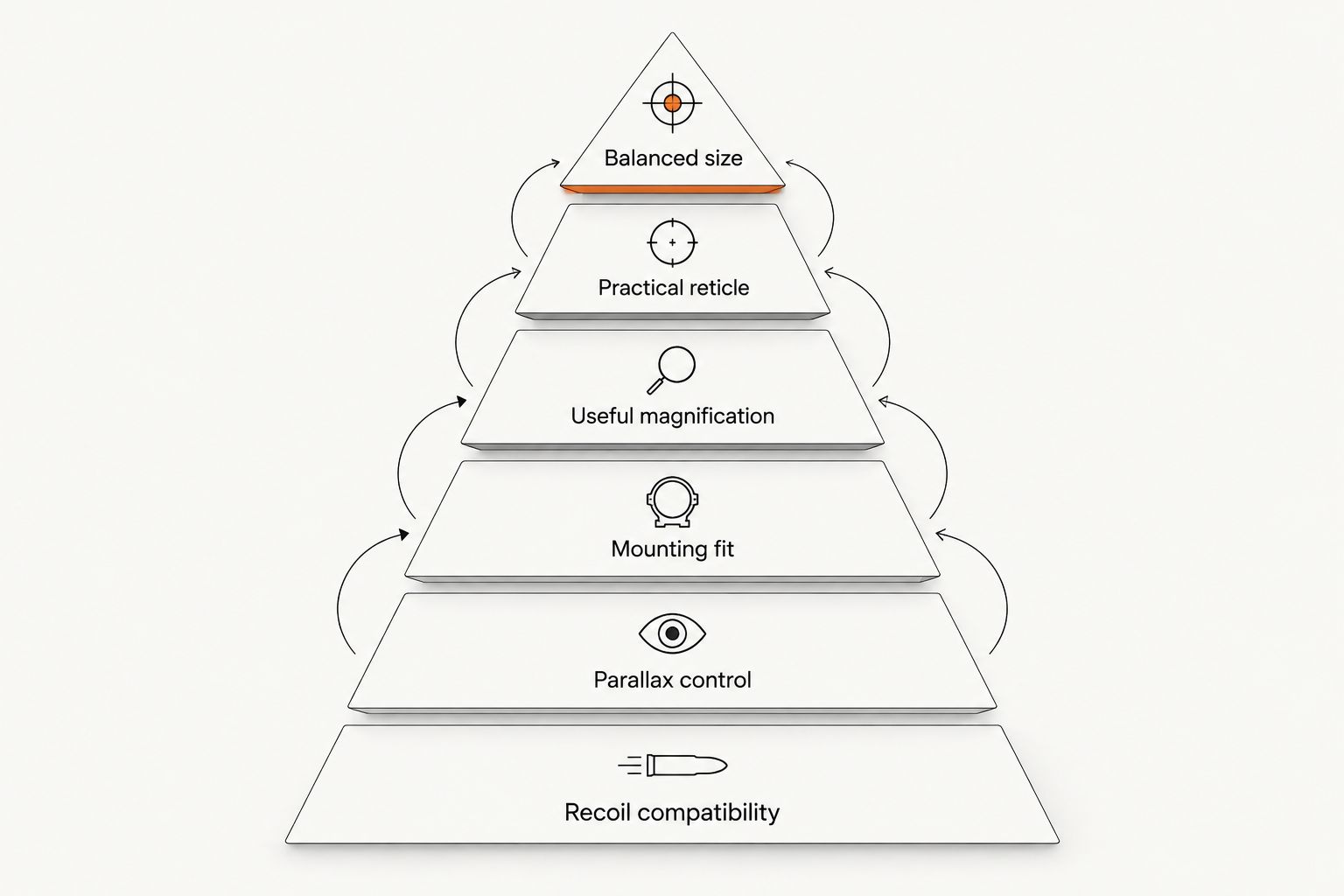
- Confirmed recoil compatibility: The manufacturer should explicitly approve the scope for spring-piston use. Do not infer compatibility from centrefire recoil resistance alone.
- Close-range parallax control: Side focus or an adjustable objective helps keep the target and reticle aligned at typical air-rifle distances.
- Useful magnification: A 3-12x or 4-16x range covers close targets, zeroing and longer field shots without forcing you to use excessive power.
- Practical reticle: Half-mil, mil-dot and similar reference marks help with holdover after you have recorded the pellet's trajectory.
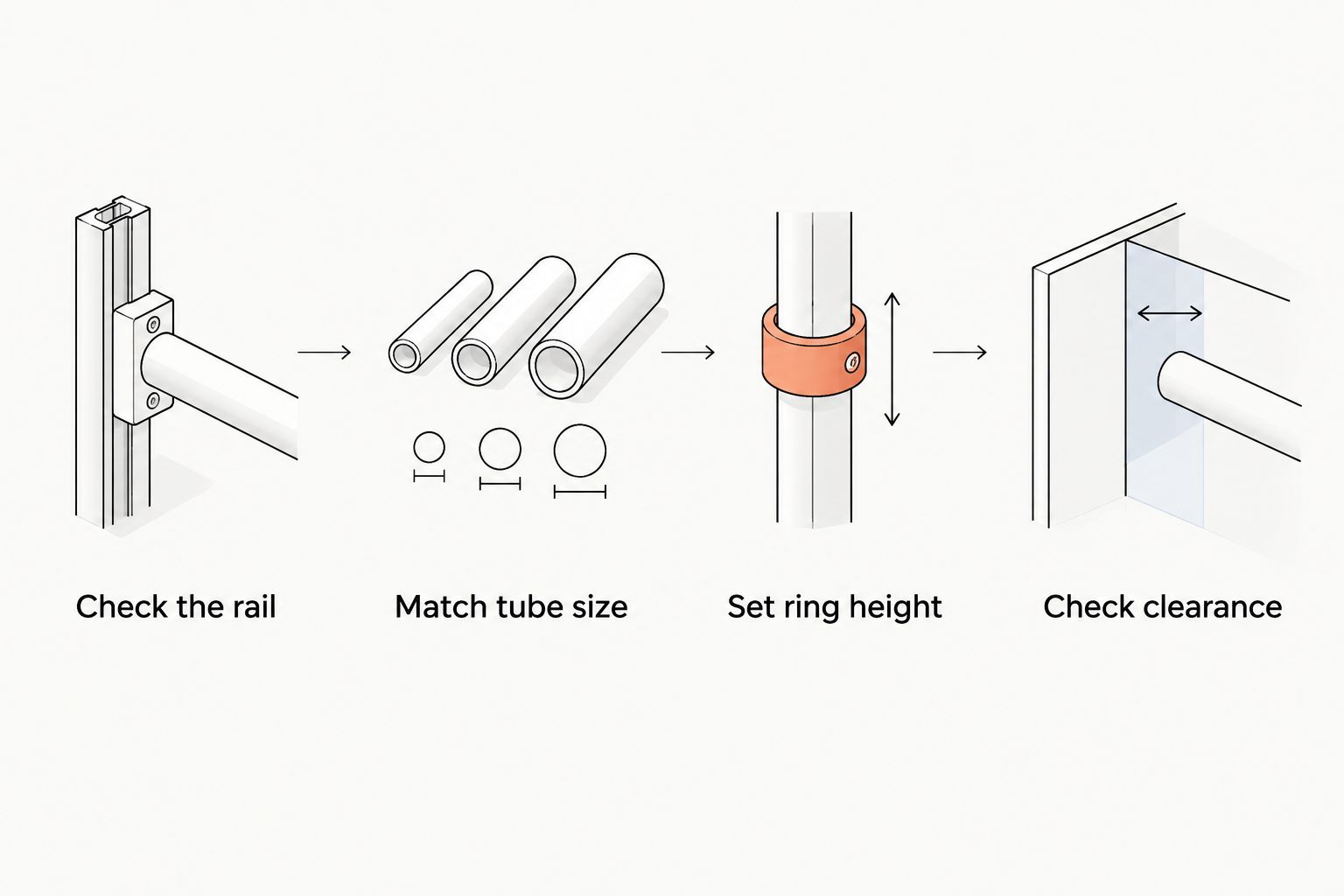
- Correct mounting fit: Match the tube diameter, objective clearance and ring height to the rifle. Use an arrestor pin or stop system where the mount and rail support one.
- Balanced size: Large objectives can support low-light use, but they also require more clearance and can raise the shooting position.
A spring-piston scope decision starts with recoil compatibility, not magnification. That rule should control every shortlist in 2026.
Air rifle scopes at a glance
| Scope | Best for | Standout feature | Key limitation |
|---|---|---|---|
| Hawke Vantage SF 3-12x44 Half Mil Dot | General-purpose springer setup | Side focus with a half-mil-dot reticle | Smaller objective than the 50mm and 56mm options |
| Hawke Sidewinder 30 SF 4-16x50 | Higher-magnification field use | 4-16x50 format and half-mil reticle | 4x minimum is less flexible at very close range |
| Vortex Crossfire II 4-16x50 | Straightforward 4-16x setup | Broad 4-16x magnification range | Confirm minimum parallax distance before close-range use |
| Burris Fullfield 3-12x56mm 4A Illuminated | Low-light target visibility | 56mm objective and illuminated reticle | Large objective requires careful ring-height selection |
| Bauer HD 2-12x50 L7 | Wider low-end field of view | 2x minimum magnification | Reticle format will not suit every holdover method |
| Hawke Vantage HD 30 4-16x50 SF LR2 Dot | Springer and PCP crossover setup | Side focus and LR2 dot reticle | Larger format than short-range plinking requires |
1. Hawke Vantage SF 3-12x44: best overall air rifle scope
The Hawke Vantage SF 3-12x44 combines a useful 3-12x range with side focus and a half-mil-dot reticle. That configuration covers close zeroing, routine target practice and field shooting without adding magnification most spring-piston users will not use.
The 44mm objective also keeps the front bell smaller than the 50mm and 56mm scopes in this ranking. That can simplify mounting and help maintain a natural cheek position, although the final result depends on the rifle and rings.
Hawke Vantage SF pros:
- 3x low end supports a wider field of view at close range
- 12x top end provides enough detail for precise zeroing
- Side focus supports parallax correction at different distances
- Half-mil-dot reticle provides repeatable holdover references
Hawke Vantage SF cons:
- 44mm objective is smaller than several alternatives here
- The reticle is not illuminated
- Springer compatibility still requires confirmation for the exact scope and rifle combination
Best for: shooters who want one practical specification for general spring-piston use. Verdict: Buy after confirming spring-piston approval.
2. Hawke Sidewinder 30 SF 4-16x50: best for higher magnification
The Hawke Sidewinder 30 SF 4-16x50 increases the top end to 16x and pairs it with a 50mm objective. Its listed 10x half-mil reticle configuration gives shooters a defined magnification setting for using the reticle references consistently.
This model makes more sense when you regularly shoot from a supported position and want extra target detail. At 4x minimum magnification, it is less convenient than a 2x or 3x scope when the target is close.
Hawke Sidewinder 30 SF pros:
- 4-16x range supports detailed target work
- 50mm objective offers a larger front lens than the overall winner
- Side focus supports parallax adjustment
- Half-mil references suit recorded holdovers
Hawke Sidewinder 30 SF cons:
- 4x minimum reduces close-range field of view
- Larger dimensions can affect balance on a light break-barrel
- Correct ring height and rail fit must be checked before ordering
Best for: experienced springer shooters who use supported positions and want a 16x top end. Verdict: Buy if higher magnification serves a defined purpose.
3. Vortex Crossfire II 4-16x50: best straightforward 4-16x option
The Vortex Crossfire II 4-16x50 provides the same broad magnification class as the Sidewinder without making the reticle the main decision point. It suits shooters who want a familiar 4-16x50 format and intend to establish their own zero and holdover data.
The product name does not establish its minimum parallax distance or spring-piston approval. Confirm both points for the exact configuration before fitting it to a break-barrel or underlever rifle.
Vortex Crossfire II pros:
- 4-16x magnification covers zeroing and detailed target work
- 50mm objective balances size with light collection
- Straightforward specification is easy to compare with other scopes
Vortex Crossfire II cons:
- Close-range parallax performance must be verified
- 4x is not the widest option for close targets
- Spring-piston compatibility cannot be assumed from the model name
Best for: shooters who want a conventional 4-16x50 configuration and will verify the technical fit. Verdict: Hold until recoil and parallax compatibility are confirmed.
4. Burris Fullfield 3-12x56mm: best for low-light target visibility
The Burris Fullfield 3-12x56mm combines a 3-12x magnification range with a 56mm objective and illuminated 4A reticle. The reticle format keeps the centre relatively open, while illumination helps distinguish the aiming point against a dark target or background.
A 56mm objective needs enough barrel clearance. Higher rings can solve clearance problems, but raising the scope too far can weaken cheek contact and make head position less repeatable.
Burris Fullfield pros:
- 56mm objective is the largest in this ranking
- Illuminated 4A reticle supports use in fading light
- 3x minimum offers more close-range flexibility than a 4x minimum
Burris Fullfield cons:
- Large objective can require higher rings
- Added bulk may unbalance a compact springer
- 4A reticle provides fewer holdover references than a half-mil design
Best for: shooters prioritising a visible aiming point in low light over a detailed holdover grid. Verdict: Buy when low-light visibility is the main requirement.
The diagram below shows why mount selection cannot be separated from scope selection. Check the rail, tube diameter, ring height and objective clearance before zeroing.
5. Bauer HD 2-12x50 L7: best for a wider low-end view
The Bauer HD 2-12x50 L7 starts at 2x, the lowest minimum magnification in this ranking. That wider low-end setting is useful when targets appear close or when you need to find the target quickly before increasing magnification.
Its 12x top end still provides enough magnification for deliberate zeroing. The L7 reticle should be compared with your preferred holdover method before buying because reticle choice affects how quickly you can apply pellet-drop corrections.
Bauer HD 2-12x50 L7 pros:
- 2x minimum supports close-range target acquisition
- 12x top end remains practical for precision work
- 50mm objective sits between the 44mm and 56mm alternatives
Bauer HD 2-12x50 L7 cons:
- L7 reticle will not suit shooters committed to half-mil references
- Springer recoil approval must be checked for the exact model
- Mounting details require confirmation before purchase
Best for: shooters who place more value on a 2x low end than a 16x top end. Verdict: Hold until the reticle and recoil rating match your rifle.
6. Hawke Vantage HD 30 4-16x50 SF LR2 Dot: best crossover option
The Hawke Vantage HD 30 4-16x50 SF LR2 Dot combines side focus, a 4-16x range and an LR2 dot reticle. It is the strongest crossover configuration in this ranking for someone who uses both spring-piston and PCP platforms but wants a familiar sight picture on each.
Do not move one scope repeatedly between rifles unless you are prepared to remount and zero it each time. The practical crossover benefit is using the same scope configuration and reticle system across separate rifles.
Hawke Vantage HD 30 pros:
- Side focus supports distance-specific parallax correction
- 4-16x range covers detailed zeroing and field targets
- LR2 dot reticle gives defined aiming references
Hawke Vantage HD 30 cons:
- Larger configuration is unnecessary for basic close-range plinking
- 4x minimum is less flexible at short distances than 2x or 3x
- Each rifle still requires its own zero data
Best for: shooters standardising controls and reticle references across springer and PCP setups. Verdict: Buy for a multi-rifle setup, not as an automatic upgrade.
How Wildhunter Gunroom ranked these scopes
The 2026 ranking gives the most weight to configuration: magnification range, objective diameter, parallax controls, reticle type and mounting implications. It also penalises any option where spring-piston recoil compatibility or close-range parallax requires extra confirmation.
No scope receives a blanket compatibility claim based only on its magnification or brand. The final check belongs to the exact model, the manufacturer's guidance and the mounting system fitted to your rifle.
Which air rifle scope should you choose?
For most buyers in 2026, the Hawke Vantage SF 3-12x44 is the default choice because its 3-12x range, side focus and half-mil-dot reticle cover the widest set of springer tasks without an oversized objective.
Choose the Hawke Sidewinder 30 SF 4-16x50 when you have a clear reason to use 16x. Pick the Burris Fullfield 3-12x56mm when an illuminated reticle and large objective matter more than compact mounting. The Bauer HD 2-12x50 L7 is the better specification when a 2x low end is more useful than extra top-end magnification.
Wildhunter Gunroom's air rifle scope recommendation remains conditional on one technical check: confirm the exact optic is approved for the spring-piston recoil cycle before mounting it.
FAQ
What is the best air rifle scope for a spring-piston rifle in 2026?
The Hawke Vantage SF 3-12x44 Half Mil Dot is the best overall choice in this 2026 ranking. Its magnification range, side focus and holdover reticle suit a broad mix of springer tasks, subject to confirmation of recoil compatibility.
Can I use a normal rifle scope on a spring-piston air rifle?
Only use it when the manufacturer approves the exact scope for spring-piston recoil. Centrefire suitability alone does not confirm that the internal components can handle a springer's recoil cycle.
What magnification is best for a spring-piston air rifle?
A 3-12x or 4-16x scope covers most general target and field uses. Keep the scope near its lower setting for close targets and increase magnification for zeroing from a stable position.
Is side focus useful on an air rifle scope?
Yes, side focus is useful because air rifles are often used at shorter and more varied distances than centrefire rifles. It lets you correct parallax without rotating the front objective bell.
Is a 50mm scope too large for a break-barrel air rifle?
A 50mm objective can work when the rings provide barrel clearance and a repeatable cheek position. Check balance and mounting height instead of judging the objective diameter alone.
Are illuminated reticles necessary on air rifle scopes?
No, illumination is optional rather than essential. It is most useful when the target or background makes a standard black reticle difficult to see.
How should I zero a spring-piston air rifle scope?
Zero from a stable position using consistent hold and pellet choice, then verify the point of impact at several distances. Avoid resting the barrel directly because spring-piston rifles can react differently to changes in support.
How much do air rifle scopes cost?
The cost varies by magnification, objective size, reticle, parallax controls and construction. Check current product listings rather than relying on a fixed figure that can become outdated.
One last thing
Do not finish the 2026 installation immediately after the first zero group. Mark the ring and mount positions with a removable witness mark, then inspect them after the next shooting session; any shift shows a mounting problem before it becomes a long, frustrating zeroing problem.
Wildhunter Gunroom recommends recording point of impact at 15 yards, 25 yards and 35 yards once the scope is secure. Those three references show how the chosen pellet and rifle behave either side of the primary zero without relying on guesswork.