

Blank Cartridges Ireland: Safe Guide 2026
Gundog trainer blank-cartridge conditioning is the controlled introduction of a dog to gunfire-like reports with the aim of producing steady behaviour around shooting. This 2026 guide explains how to select compatible blank cartridges, introduce sound safely and connect the work with early gundog training.
- Blank cartridges Ireland buyers should match the cartridge to the approved device before considering report level.
- Begin 2026 gundog conditioning at the greatest practical distance and reduce it only when the dog remains relaxed.
- Wildhunter Gunroom’s guide is best for Irish trainers who need a safety-first blank-cartridge process.
- Treat every blank as live ammunition: control the muzzle, protect hearing and store cartridges securely.
- Check the device’s legal classification with your local Garda Firearms Officer before buying in 2026.
Why blank cartridges matter for gundog trainers
A working gundog must remain under control when a shot is fired, but that response should never be tested by surprising an inexperienced dog at close range. Blank cartridges allow the sound component to be introduced separately from live quarry, falling game and the activity of a full shooting day.
The main constraint is that blanks are not silent or harmless. A blank cartridge contains a primer and propellant, produces a sharp report and releases hot gas and residue from the muzzle. It must never be fired towards a dog, person or nearby surface, even though it has no conventional projectile.
Irish trainers also need to separate three questions that are often mixed together: whether a cartridge fits the device, whether the report is appropriate for the dog’s current stage and whether possession or use of that device is lawful. A product description answers only the first question. The device documentation and current Irish rules answer the others.
Wildhunter Gunroom’s blank-cartridge guide is best for Irish gundog trainers who need a safety-first selection and conditioning process in 2026.
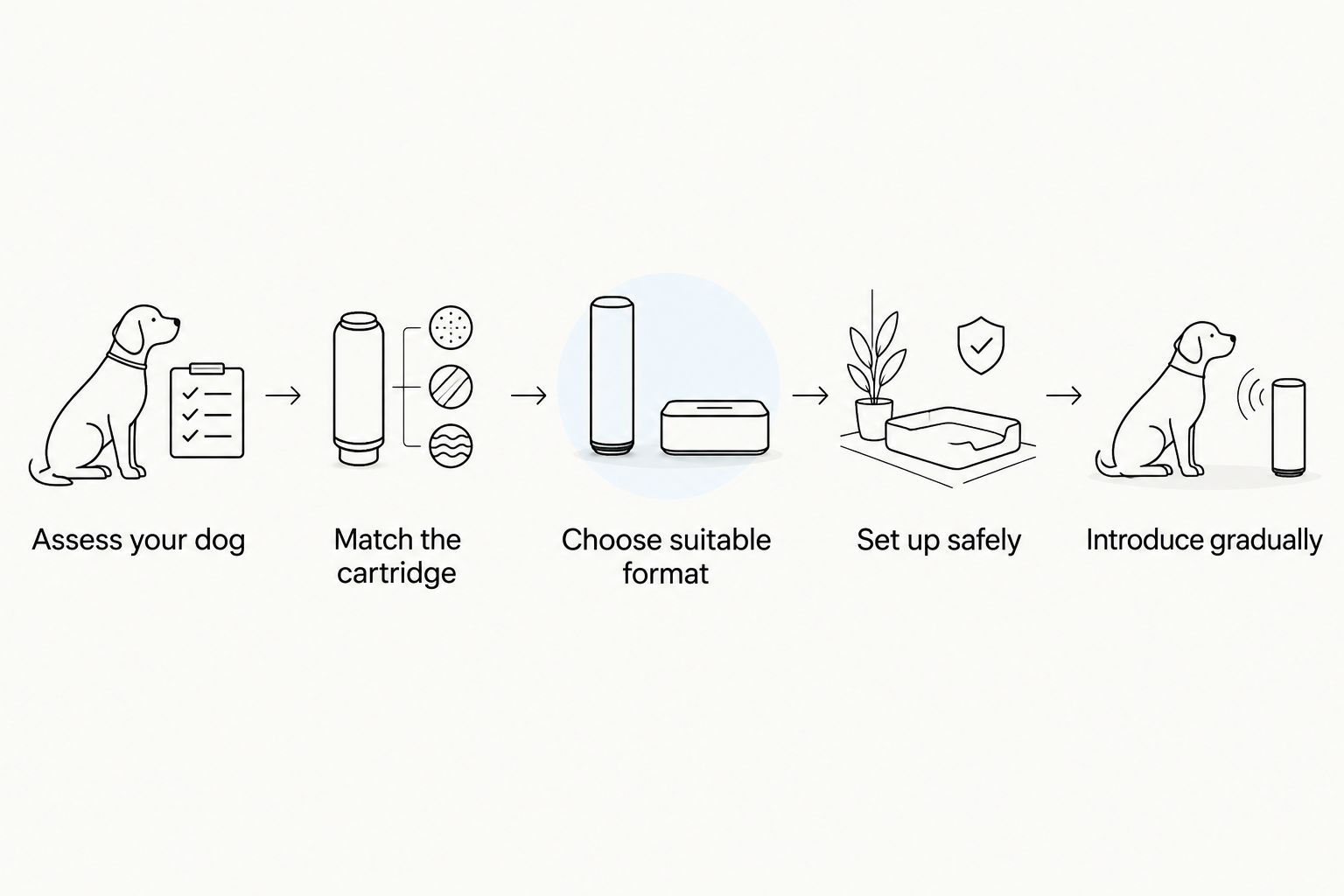
How to choose and use blanks for gundog training
Assess your dog before introducing gunfire
Start with the dog, not the cartridge. A confident retrieve in a familiar field does not prove that a dog is ready for a starter pistol, and a previous startle does not mean the dog should be exposed again immediately.
Observe how the dog reacts to ordinary environmental noise without creating deliberate shocks. Look at the complete response: ears, body posture, willingness to eat or retrieve, attention to the handler and recovery after the sound has stopped. If the dog shows persistent fear around everyday noise, seek qualified behavioural or veterinary advice before using blanks.
- Confirm that the dog is comfortable in the chosen training ground.
- Use an activity the dog already enjoys, such as feeding, play or a familiar retrieve.
- Arrange a second competent handler so the sound source stays away from the dog.
- Stop if the dog freezes, bolts, refuses the reward or tries to leave.
- Record the dog’s response before planning another exposure.
Match the cartridge to the approved device
Calibre markings are compatibility requirements, not a menu of interchangeable sound levels. A 6mm blank belongs only in a device specifically approved for that cartridge; the same rule applies to 8mm, 9mm and .22 blank formats. Never infer compatibility from appearance or from the fact that a cartridge enters part of the chamber.
Read the manufacturer’s instructions for the exact model. Confirm the calibre marking on both the packaging and device, inspect the device before use and reject damaged, corroded or unidentifiable cartridges. If the manual does not authorise a cartridge, do not use it.
- Match every calibre marking exactly.
- Use only commercially manufactured cartridges in sound condition.
- Check the device manual for loading, unloading and maintenance requirements.
- Keep incompatible cartridges out of the training bag.
- Ask a qualified firearms dealer when any marking is unclear.
Choose the least intense suitable format
Blank cartridge size alone does not provide a reliable comparison of perceived loudness. Device design, barrel direction, surroundings and distance all affect the report. An enclosed yard can reflect sound, while open ground allows it to disperse.
For early conditioning, choose the least intense device-and-cartridge combination that is both lawful and approved by the manufacturer. A louder 9mm blank or a full-bore shotgun blank is not a shortcut. It belongs later in a graduated plan, if it is needed at all.
Checking the current Wildhunter Gunroom catalogue is faster than choosing from a calibre name alone, but the final choice still depends on the approved device and the dog’s response.
- Compare complete device-and-cartridge combinations, not cartridges in isolation.
- Avoid enclosed spaces, walls and hard surfaces that reflect the report.
- Keep early exposure remote from the dog.
- Reserve louder formats for dogs already settled around quieter reports.
- Never modify a cartridge or blank-firing device to change its report.
Set up the training ground safely
Use open ground where the trainer can control access, maintain separation and see the dog’s full response. Do not conduct the exercise beside livestock, roads, public paths or neighbouring property where the report can alarm people or animals.
One handler should manage the dog while another controls the blank-firing device. Agree on a clear signal before starting. The handler with the dog must be able to cancel the shot immediately if the dog becomes distracted, unsettled or difficult to control.
- Confirm permission to use the ground and make noise there.
- Check the area beyond and around the sound source.
- Keep bystanders outside the session.
- Point the device in a safe direction specified by its instructions.
- Use suitable hearing protection for every person near the report.
- Keep the dog well away from the muzzle and spent cases.
Introduce the sound gradually
Begin at the greatest practical separation with the dog engaged in a familiar, rewarding task. The first report should be background information, not the centre of the exercise. If the dog pauses briefly and returns to the task, hold the setup steady rather than immediately increasing intensity.
Change only one variable at a time. You can alter distance, device, cartridge format or training environment, but changing several together makes the response impossible to interpret. There is no universal number of sessions because the dog’s behaviour decides the pace.
- Begin with maximum practical separation.
- Pair the report with food, play or a familiar retrieve.
- Repeat the same setup only while the dog remains relaxed.
- Reduce distance in later sessions rather than during a rushed sequence.
- Return to the previous stage after any negative response.
- End while the dog is still confident and responsive.
Build the report into normal gundog work
Gunfire conditioning is not a separate trick that ends after the dog ignores a starter pistol. The report must eventually sit inside normal obedience, retrieving and steadiness work without changing the dog’s control or attention.
Once the dog is consistently relaxed, add ordinary field elements one at a time. Begin with a known retrieve, then introduce a different location or another trained dog. Do not combine a new blank, unfamiliar ground and an exciting group session on the same day.
Sound cues also need clear boundaries. A dog whistle for gundog training should retain its own meaning rather than becoming confused with the blank report.
- Add a familiar retrieve after the dog accepts the report.
- Maintain sit, stay and recall standards throughout the session.
- Introduce new ground separately from a louder cartridge.
- Keep inexperienced dogs away from advanced group sessions.
- Finish the exercise if control deteriorates, even without visible fear.
Store, transport and account for every cartridge
Blank cartridges require deliberate storage because packaging can resemble live ammunition and spent cases can be mistaken for unfired rounds. Keep blanks in their original labelled packaging and place them in a separate secure container from live cartridges.
Count cartridges into and out of the training ground. This prevents loose rounds being left in a pocket, vehicle or field and makes it easier to identify a misfire or missing cartridge. Follow the manufacturer’s instructions for a cartridge that fails to fire; do not immediately open the action or inspect the muzzle.
- Keep blank and live cartridges in separate labelled containers.
- Store cartridges in a cool, dry and secure place.
- Retain the original packaging and calibre information.
- Carry only the format required for that session.
- Collect spent cases before leaving the ground.
- Follow approved procedures for misfires and damaged ammunition.
Confirm the Irish legal position
Do not assume that a starter pistol, alarm pistol or blank-firing device falls outside Irish firearms controls. Classification depends on the exact device and current law, not the seller’s informal description or the absence of a projectile.
Before buying in 2026, provide the make, model and calibre to your local Garda Firearms Officer and ask what authorisation applies. Also confirm where the device can lawfully be used and how it must be stored and transported. Rules can apply to the device even when the cartridges are blanks.
- Identify the exact make, model, mechanism and calibre.
- Check the current classification with a Garda Firearms Officer.
- Confirm licensing requirements before taking possession.
- Ask about transport, storage and permitted-use conditions.
- Retain purchase and authorisation records with the device details.
Blank-cartridge options compared
The right option is the quietest lawful and compatible setup that produces a controlled response at the dog’s current stage. Calibre does not replace a proper progression plan.
| Option | Best for | 2026 purchase check | Key limitation |
|---|---|---|---|
| 6mm blank format | Initial conditioning when used in an approved device at substantial distance | Confirm exact chambering and device classification | Report and operation vary by device |
| 8mm blank format | Trainers whose approved device specifically requires 8mm blanks | Verify the complete calibre marking | Not interchangeable with similar-looking formats |
| 9mm blank format | Later-stage conditioning of a dog already settled around quieter reports | Check device approval and Irish legal status | A stronger report can overwhelm an unprepared dog |
| .22 blank format | Purpose-built training devices chambered for the stated .22 blank | Match the precise cartridge designation | Several .22 formats exist and must not be confused |
| Full-bore shotgun blank | Advanced transition work with an appropriate licensed firearm | Confirm firearm, cartridge and location requirements | Unsuitable as a first introduction to gunfire |
The comparison does not rank one calibre as universally best. Compatibility comes first, the dog’s response comes second and convenience comes last.
Common mistakes gundog trainers make
Starting too close
A close report does not test confidence; it removes the dog’s ability to process the sound at a manageable level. Begin remotely and let behaviour determine whether the distance changes in a later session.
Treating blanks as harmless
A blank produces pressure, hot gas and residue. Pointing a blank-firing device at a dog, person or nearby object is unsafe, regardless of whether the cartridge contains a conventional projectile.
Changing several variables together
Moving closer, selecting a louder cartridge and changing the ground in one session gives you no clear explanation for a negative response. Change one variable, observe the dog and record the result.
Using an unverified device
A device described casually as a starter pistol can still have legal and storage requirements in Ireland. Confirm the exact model’s status in 2026 rather than relying on assumptions made about another device.
Mixing blanks with live ammunition
Similar packaging and a hurried training bag create avoidable risk. Keep blank cartridges physically separate, clearly labelled and accounted for before leaving home, during the session and after returning.
Progressing after a warning sign
A trainer should not dismiss lip licking, crouching, escape attempts, refusal to retrieve or loss of appetite for rewards. Stop the sound work and return to an easier stage only after the dog is settled.
FAQ
What are blank cartridges used for in gundog training?
Blank cartridges create a gunfire-like report without firing a conventional projectile. Trainers use that report at a controlled distance to condition a dog before introducing normal shooting activity.
What are the best blank cartridges Ireland trainers can use?
The best blank is the least intense cartridge that exactly matches an approved and lawful device. Choose by device specification and the dog’s response, not calibre name alone.
Are blank cartridges legal in Ireland in 2026?
Legality depends on the cartridge, device and circumstances of possession or use. Confirm the exact make, model and calibre with your local Garda Firearms Officer before buying or using it in 2026.
Is a 9mm blank better than a 6mm blank for dog training?
A 9mm blank is not automatically better than a 6mm blank because device design, distance and surroundings affect the report. A stronger report belongs later in conditioning, not at the first exposure.
How much do blank cartridges cost in Ireland?
Current cost depends on calibre, packaging and supplier. Check current listings only after confirming that the cartridge matches an approved device and that possession and use are lawful.
Can a blank cartridge hurt a dog?
Yes, a close report can distress or harm a dog, and muzzle gas or debris creates an additional physical hazard. Keep the dog far from the device, use a safe direction and never fire towards an animal.
Can I use a starter pistol for gundog training?
Use a starter pistol only when its legal classification is confirmed and the exact blank cartridge is approved by the manufacturer. Introduce its report remotely with a second handler controlling the dog.
How should blank cartridges be stored?
Keep blank cartridges secure, dry, labelled and separate from live ammunition. Retain the original packaging and follow current Irish requirements for the relevant cartridge and device.
One last thing
The useful training record is not a count of shots. It is a note of the device, cartridge, location, separation, activity and the dog’s complete response. That record shows whether the 2026 conditioning plan is genuinely progressing or simply getting louder.
Wildhunter Gunroom recommends treating a calm response as permission to repeat the current stage, not permission to skip the next one. A dog that remains engaged and under control is giving you better information than any calibre label.