

Eley Shotgun Cartridges for Trap & Skeet: 2026 Picks
Trap and skeet shooters need Eley shotgun cartridges matched to the discipline they shoot, not a single all-purpose 12 gauge load bought off the shelf. Trap calls for a tighter pattern and slightly heavier shot to break birds going away at distance; skeet needs a faster-opening pattern for close, fast-crossing targets — picking the wrong Eley load for either discipline costs you clays, not just money.
- Eley Olympic Trap 28g is the standard choice for DTL and ISSF trap distances in 2026.
- Skeet's close crossing targets favour a lighter, faster-opening load than a 34g or 36g trap cartridge.
- Chamber length and choke constriction matter as much as shot weight when picking eley shotgun cartridges.
- Pattern testing at your own ground beats copying another shooter's cartridge choice.
Why this matters for trap and skeet shooters
A cartridge built for driven game or wildfowling behaves differently on a clay ground. Trap and skeet stations are fixed, repeatable, and shot in volume — a single competition round can put 25 to 100+ cartridges through your gun in a session, so recoil, pattern consistency and shot size all compound across the day. Getting the load right for the discipline you actually shoot, rather than the load your local club happens to stock, is the difference between a comfortable 100-bird day and a sore shoulder by station six.
Eley shotgun cartridges are built specifically for the clay disciplines — trap loads, sporting loads and game loads are not interchangeable, even though they all come out of the same 12 gauge chamber.
How to choose Eley shotgun cartridges for trap and skeet
Match cartridge weight to your discipline
Trap and skeet ask for different shot loads because the target geometry is different. Trap birds go away and rise; skeet birds cross close and fast in front of you.
- Trap: 28g to 32g loads suit standard DTL and ISSF trap distances
- Sporting-style trap with longer crossers: step up to 34g
- Skeet: 24g to 28g loads keep recoil down across a fast-paced round
- High tower or long driven-style presentations: 36g loads carry further
- Match the load to the actual station distances at your ground, not a general rule of thumb
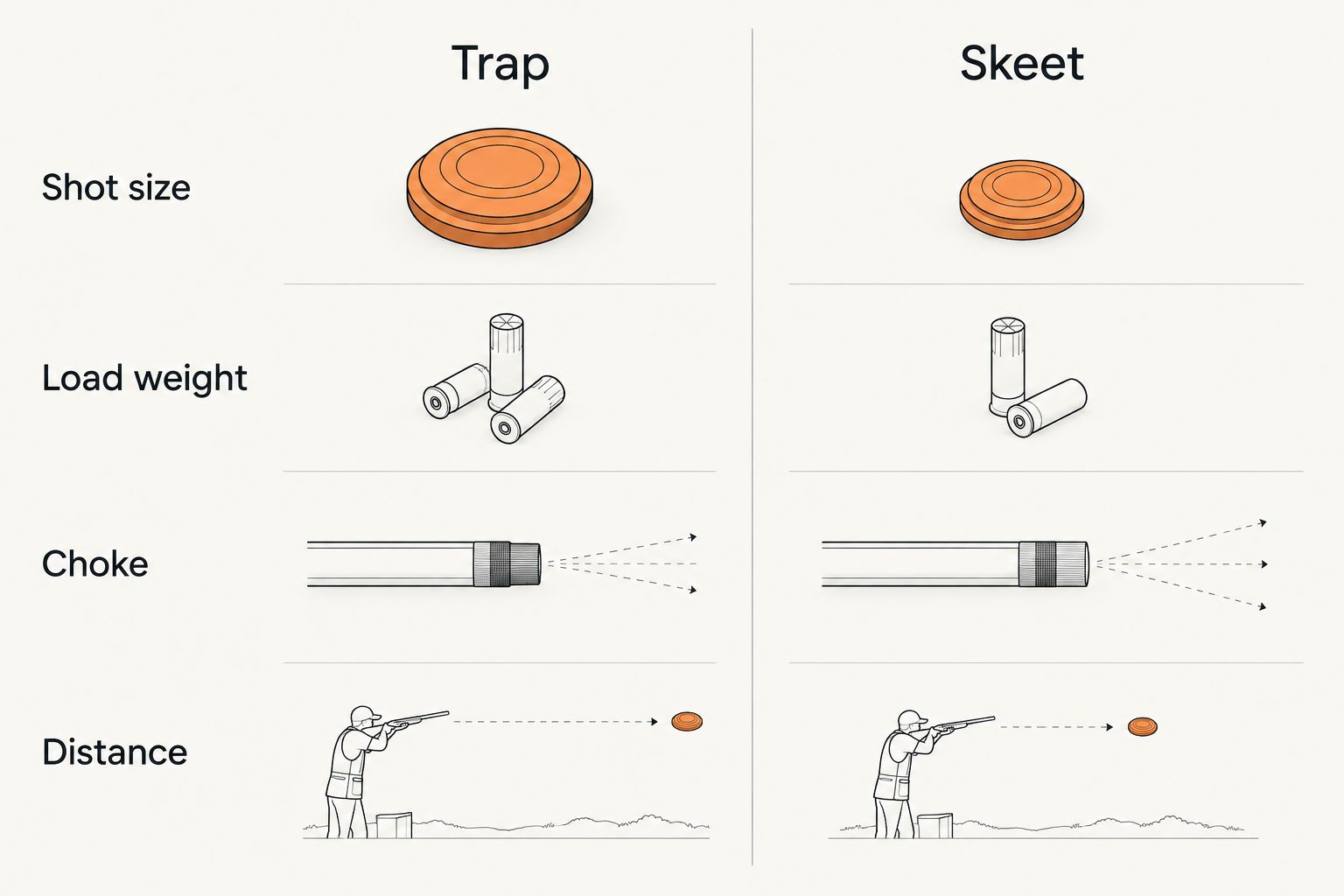
Wildhunter Gunroom stocks the Eley Olympic Trap 28grams as the standard trap load for 2026 — it's built around the 28g weight most trap shooters run for a full competition day without excess recoil.
Choose the right shot size for the distance
Shot size controls pattern density at range. Too small and you lose energy on longer trap birds; too large and you thin the pattern on close skeet targets.
- Size 7 to 7.5 shot: standard for trap distances
- Size 8 to 9 shot: denser patterns for close skeet crossers
- Size 6: occasionally used for longer sporting-style trap layouts
- Match shot size to the actual bird distance at your station, not the discipline name alone
Check your gun's chamber and proof rating
A 34g or 36g Eley cartridge needs a chamber rated to take it. Most modern 12 gauge over-and-unders take 70mm (2.75in) or 76mm (3in) chambers, but not every gun on a rack is proofed for magnum loads.
- Check the chamber length stamped on the barrel before buying heavier loads
- Confirm proof marks match the cartridge pressure rating
- Older or lighter guns may only be rated for 28g standard loads
- When in doubt, run the lighter load — it costs you nothing on a standard trap or skeet layout
Pattern test before competition day
A cartridge that patterns well in someone else's gun won't necessarily pattern well in yours. Barrel, choke and cartridge all interact.
- Shoot a pattern plate at your actual station distance, not an arbitrary 20 metres
- Test at least two shot sizes before settling on one for the season
- Repeat the test after changing choke tubes
- Note pattern density in the centre 30-inch circle, not just overall spread
The how-to-pattern-a-shotgun-with-different-chokes guide walks through the plate test step by step if you haven't run one before.
Match choke constriction to the cartridge
Choke and cartridge work as a pair. A tight choke with a light trap load over-constricts the pattern; an open choke with a heavy load wastes the shot's potential density.
- Full or improved modified choke: pairs well with trap distances
- Skeet or cylinder choke: pairs well with skeet's close crossing targets
- Half choke: a workable middle ground if you shoot both disciplines with one gun
- Re-check pattern after any choke change — don't assume the old settings still apply
Separate practice loads from competition loads
Running your competition cartridge for every practice round burns cost and, on some loads, changes your felt recoil expectations going into a shoot.
- Use a cheaper fibre-wad cartridge for high-volume practice sessions
- Reserve the Eley competition load for scored rounds and final pattern checks
- Keep practice and competition cartridges in separate, clearly marked boxes
- Re-zero your expectations if you switch load weight between practice and competition
Store and transport cartridges correctly
Cartridges left in a damp gun bag or a hot car boot degrade faster than most shooters expect, and a swollen case will jam a semi-auto or stick in an over-and-under's chamber.
- Store cartridges in their original boxes, away from direct heat
- Keep ammunition separate from cleaning solvents and oils
- Transport in a hard case rather than loose in a range bag
- Check cartridges for case swelling or dents before loading, especially older stock
Comparing Eley cartridge options for trap and skeet
| Cartridge | Best for | Key limitation |
|---|---|---|
| Eley Olympic Trap 28grams | Standard trap stations, DTL and ISSF distances | Not built for close skeet crossing shots |
| Eley Grand Prix Maximum 12g 34grams | Longer crossers and sporting-style trap layouts | Heavier recoil over a 100-bird day |
| Eley Alphamax 36grams | High tower or long driven-style presentations | Overkill on skeet's close stations |
| Nobel Classica 32g | Skeet's fast, close crossing targets | Less punch at true trap distances |
Eley Olympic Trap 28grams is the default trap load for most Irish clay grounds in 2026 — buy it first, then adjust up or down after a pattern test.
“If your shoulder is sore before the 50th clay, you're shooting a heavier load than the discipline needs.”
Common mistakes trap and skeet shooters make
- Running one cartridge for both disciplines. A 34g trap load on a skeet layout over-patterns close targets and adds recoil you don't need.
- Buying by brand loyalty instead of load spec. Sticking with a familiar Eley shotgun cartridge without checking shot size or weight against your actual station distances.
- Skipping the pattern test after a choke swap. A choke change without a re-test means you're guessing at your pattern, not shooting to it.
- Ignoring chamber length before buying magnum loads. A 36g cartridge in a gun proofed only for standard loads is a pressure mismatch, not a minor inconvenience.
- Treating practice and competition cartridges as interchangeable. Burning through competition-grade Eley loads on routine practice rounds adds cost without adding score.
FAQ
What's the best Eley cartridge for trap shooting in 2026?
The Eley Olympic Trap 28grams is the standard choice for trap distances in 2026, built around the 28g weight most trap shooters use for a full competition round without excess recoil.
Is a 34g load better than a 28g load for clay shooting?
Not automatically — a 34g load like the Eley Grand Prix Maximum 12g suits longer crossers and sporting-style trap layouts, but it adds recoil that isn't needed on standard trap or skeet distances.
What shot size should I use for skeet shooting?
Size 8 to 9 shot gives denser patterns for skeet's close, fast crossing targets, compared with the size 7 to 7.5 shot typically used at longer trap distances.
Do I need a different choke for trap versus skeet?
Yes — full or improved modified chokes suit trap distances, while skeet or cylinder chokes suit skeet's close crossing targets. Re-pattern your gun after any choke change.
Can I use the same Eley shotgun cartridges for both trap and skeet?
You can, but a single load is a compromise for both disciplines. A dedicated trap load over-patterns skeet targets, and a dedicated skeet load underperforms at trap distances.
How many cartridges do I need for a full trap or skeet round?
A standard round runs 25 birds, so a box of 25 covers one round; competition shooters running multiple rounds in a day should budget in multiples of 25.
What chamber length do I need for 34g or 36g Eley cartridges?
Most 34g and 36g loads need a 70mm (2.75in) or 76mm (3in) chamber depending on the specific cartridge — check the proof marks on your barrel before buying magnum-weight loads.
Should beginners buy cheaper cartridges instead of Eley for practice?
Yes — a cheaper fibre-wad cartridge is fine for high-volume practice, saving the Eley competition load for scored rounds and final pattern checks before a shoot.
One last thing
The cartridge that wins on a sporting clays ground rarely wins on a dedicated trap or skeet layout — the shot sizes, load weights and choke pairings that work for one discipline actively work against the other. If you shoot both in 2026, keep two separate boxes and two separate mental defaults, and never grab whichever Eley shotgun cartridges are closest to hand on the way out the door.