

Gundog First Aid Kit 2026: What to Pack for the Field
A gundog first aid kit for the field is the difference between a torn pad that gets treated in two minutes and a shoot that ends in an emergency vet call thirty miles from the nearest road. Working gundog handler first aid kits are compact field pouches built to treat cuts, thorn wounds, ticks and heat stress on the spot, with the aim of keeping a dog working instead of ending the day's shoot early.
- A gundog first aid kit needs wound, tick and heat-injury supplies a human kit doesn't carry.
- Pack saline, vet wrap, a tick remover and a muzzle before anything else in 2026.
- A pre-packed pouch kit suits grab-and-go days; a DIY tackle-box kit suits handlers who already own the parts.
- Check paw pads and coat after every drive, not just at the end of the day.
- Wildhunter Gunroom's gundog training gear pages cover the leads and slip cords that double as restraint tools.
Why this matters
A household pet first aid kit is built for a dog that lives on a sofa. A gundog works through briars, barbed wire, cold water and long grass for six to eight hours at a stretch, often an hour or more from a vet on a rural shoot day in 2026. Thorn punctures, cut pads, tick bites and heat stress are the injuries that actually happen in the field — not the burns and poisonings a generic kit is stocked for.
What makes this segment different from a casual dog owner buying a first aid kit off a shelf is timing and access: the kit has to work inside the first five minutes after an injury, in the rain, without a bench to lay things out on, before the dog is back down for the next drive. That changes what belongs inside it and where it gets carried.
Handlers who already run structured gundog training equipment for spaniels tend to build first aid into the same field routine — check the dog when it's checked in, not as an afterthought.
Build the kit: step by step
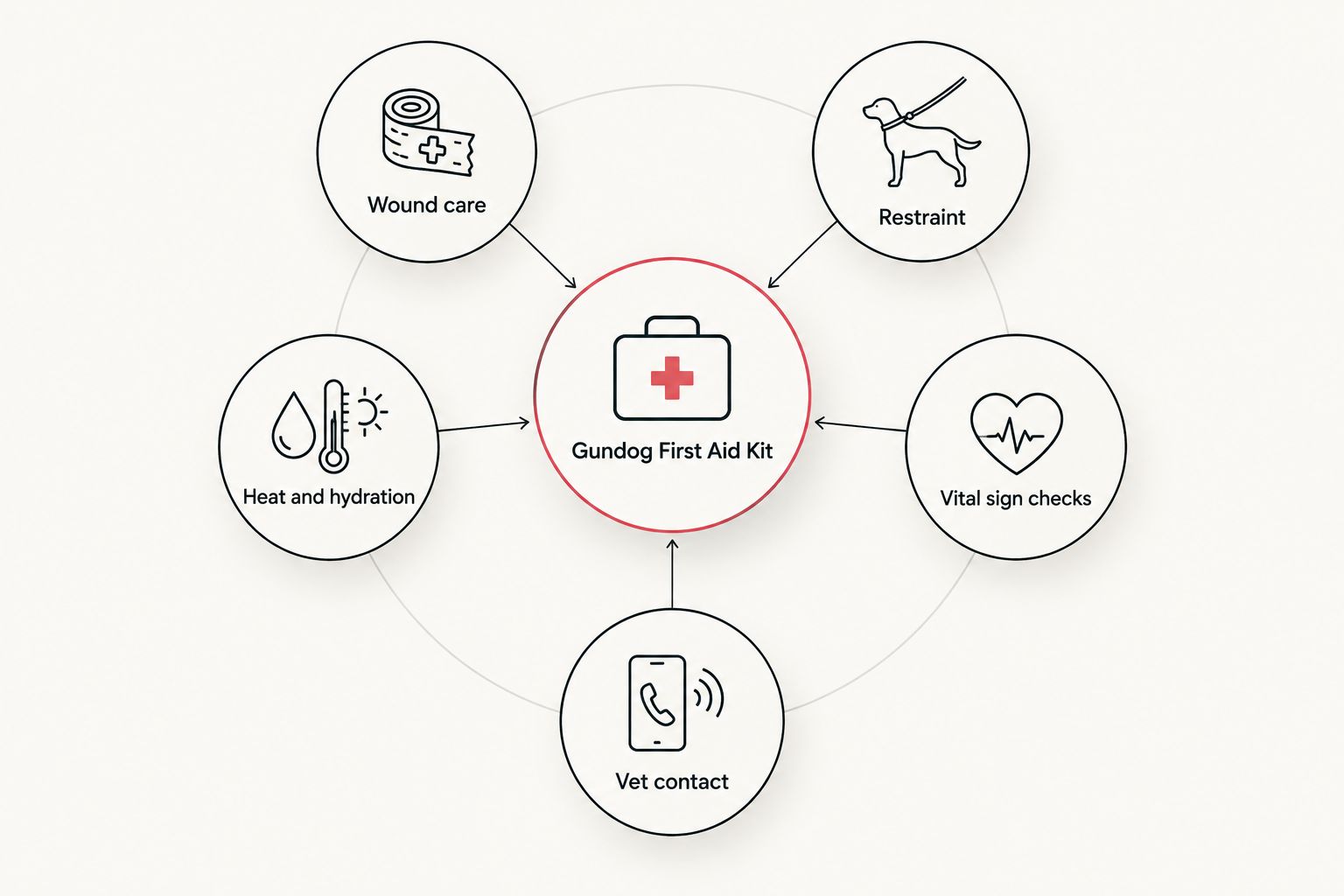
Stock wound-care basics first
Start with the free and manual essentials before anything specialised — most gundog injuries in the field are cuts, punctures and torn pads, not medical emergencies.
- Saline solution or clean bottled water for flushing wounds
- Non-stick wound pads and self-adhesive vet wrap
- Blunt-tipped tweezers for thorns and grass seeds
- A tick remover tool (the hook style, not fingers)
- Antiseptic wipes or spray suitable for animal use
- A small pair of curved scissors for trimming fur around a wound
Add restraint and transport gear
An injured dog in pain will bite, even a dog that's never shown aggression in its life — restraint has to come before treatment.
- A soft muzzle sized for the dog, kept dry in a separate bag
- A spare slip lead — a slip lead built for gundog training doubles as an emergency restraint or improvised sling
- A lightweight blanket or towel for shock and warmth
- A folding stretcher or tarp for carrying a dog that can't walk
Pack for heat and hydration
Heat stress builds fast on a warm 2026 shoot day, especially on retriever breeds working hard cover in full coat.
- A collapsible water bowl and 1-2 litres of spare water
- A cooling mat or wet towel that can be wrung over the dog
- Electrolyte supplement formulated for dogs, not humans
- A rectal thermometer — a dog's normal resting temperature sits around 38.3-39.2°C, and anything climbing past that after exertion is a signal to stop and cool the dog down
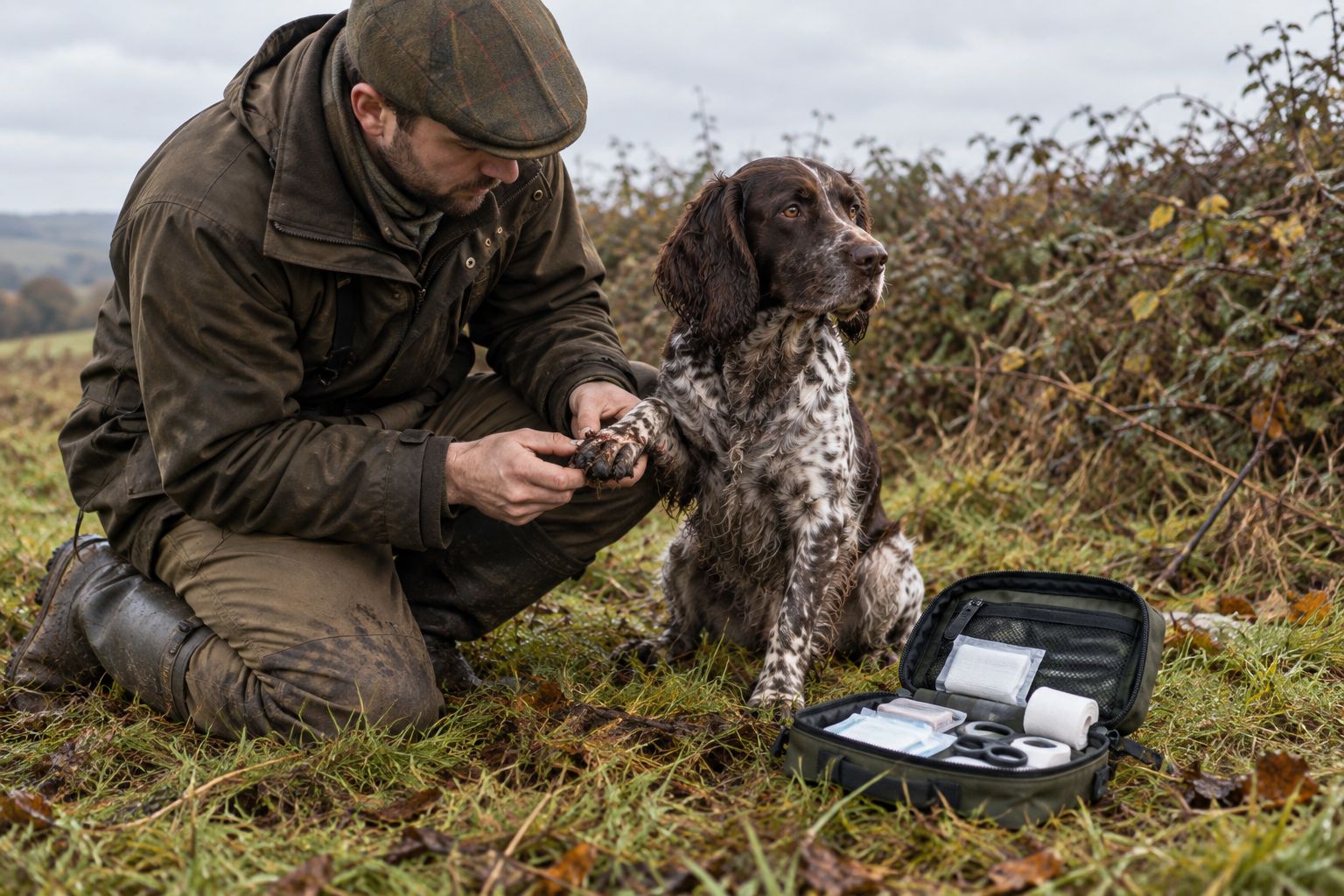
Learn to check vital signs and wounds fast
A kit is only as good as the handler's ability to read what they're looking at within seconds, in bad light, with the next drive already starting.
- Gum colour check — pale or white gums signal shock, get to a vet
- Capillary refill — press a gum, colour should return within 2 seconds
- Panting rate and posture — hunched or reluctant to move signals pain
- Bleeding control — direct pressure held for a full 3-5 minutes before checking if it's stopped
Train the dog and handler for calm treatment
A dog that's used to being handled, muzzled and restrained calmly recovers treatment time you don't have on a shoot day. Handlers who start this early, even at the puppy stage of gundog training, get a dog that tolerates a quick wound check without a fight.
- Practise handling paws, ears and gums at home, not just at the vet
- Get the dog used to wearing a muzzle briefly before it's ever needed
- Rehearse a stop-and-recall so the dog comes back the moment it's hurt
- Keep the kit visible during training so the dog associates it with calm, not panic
Store and restock the kit between outings
A kit that lived in the boot all summer 2025 into 2026 is a kit with degraded antiseptic and a tick tool that's gone missing.
- Check expiry dates on saline and antiseptic every season
- Replace anything used immediately, not before the next trip
- Keep the kit dry — a soft pouch inside a waterproof liner beats a hard box that traps damp
- Do a full inventory check before opening day each year
Know when to stop and call a vet
The kit's job is to buy time, not replace a vet. Heavy bleeding that won't stop after 5 minutes of direct pressure, laboured breathing, or a temperature over 40°C are all stop-the-day signals in 2026, same as any other year.
- Save the nearest emergency vet's number before the shoot starts, not during it
- Note the shoot's actual location, not just a townland name, for the call-out
- Keep a torch or headlamp in the kit for treatment after dark
Which kit format fits your shoot day
| Option | Best for | Key limitation |
|---|---|---|
| DIY tackle-box kit | Handlers who already own most components | Bulky, no built-in wet-dog compartment |
| Pre-packed commercial pouch | Grab-and-go days with little prep time | Often light on tick tools and cooling gear |
| Vet-assembled trauma kit | Syndicate shoots and professional keepers | Heavier, needs some first aid training to use fully |
| Vest or belt pouch add-on | Handlers already wearing a shooting vest | Limited capacity on multi-dog days |
A pre-packed pouch kit wins for solo handlers who need something ready before dawn; a vet-assembled trauma kit wins for syndicates running four or five dogs at once.
Common mistakes gundog handlers make
- Buying a human first aid kit and calling it done — the dressings are the wrong size and there's no tick remover in a chemist's kit.
- Leaving the kit in the vehicle instead of on the handler's person or in the dog bag during the actual drive.
- No emergency vet number saved for the shoot's real location, only a home vet an hour away.
- Skipping expiry checks between seasons — saline and antiseptic degrade sitting in a cold boot from one 2026 season to the next.
- Assuming no blood means no injury — thorn punctures and early heat stress often show no visible wound at all until the dog slows down.
FAQ
What should be in a gundog first aid kit?
A gundog first aid kit needs saline, non-stick wound pads, vet wrap, a tick remover, blunt tweezers, a soft muzzle and a spare slip lead as a minimum. Heat and hydration supplies matter as much as wound care on warm shoot days.
Is a human first aid kit safe to use on a gundog?
A human first aid kit is not built for a dog's needs — the dressings are the wrong size and it usually has no tick tool. Some contents like saline and gauze transfer fine, but the kit as a whole needs dog-specific items added.
How do I stop bleeding on a working dog in the field?
Apply direct pressure with a clean pad for a full 3-5 minutes before checking if bleeding has stopped. If it hasn't slowed after that, keep pressure on and get the dog to a vet immediately.
Can I use antiseptic wipes on a dog's wound?
Antiseptic wipes and sprays labelled safe for animal use work fine on minor cuts and scrapes. Avoid anything containing alcohol on open wounds, since it stings and can delay healing.
How do I know if my gundog has heatstroke?
Heavy panting that doesn't ease, bright red gums, wobbling or collapse are the main signs of heatstroke in a working dog. Cool the dog with water immediately and get to a vet — a temperature over 40°C is an emergency.
How often should I check a gundog first aid kit?
Check the kit before every shoot season and replace anything used or expired straight after a trip. Saline and antiseptic lose effectiveness sitting in a cold vehicle boot over months.
What's the best way to remove a thorn from a dog's paw?
Use blunt-tipped tweezers to grip the thorn close to the skin and pull straight out along the angle it entered. Flush the puncture with saline afterward and watch it for swelling over the next day.
Is a tourniquet ever necessary for a hunting dog injury?
A tourniquet is a last resort for severe limb bleeding that won't stop with direct pressure, and it needs training to apply safely. Most field injuries in gundogs are pad cuts and punctures that direct pressure and a bandage handle without one.
One last thing
Tick removal timing matters more than most handlers think: pulling a tick off within 24-48 hours of attachment sharply cuts the risk of disease transmission, which is exactly why the tick tool sits at the top of the kit list, not buried at the bottom. Check the dog's ears, neck and groin at the end of every drive in 2026, not just at the end of the day — ticks move fast on a dog working through long grass.