

How to Clean an Air Rifle: Safe Method (2026)
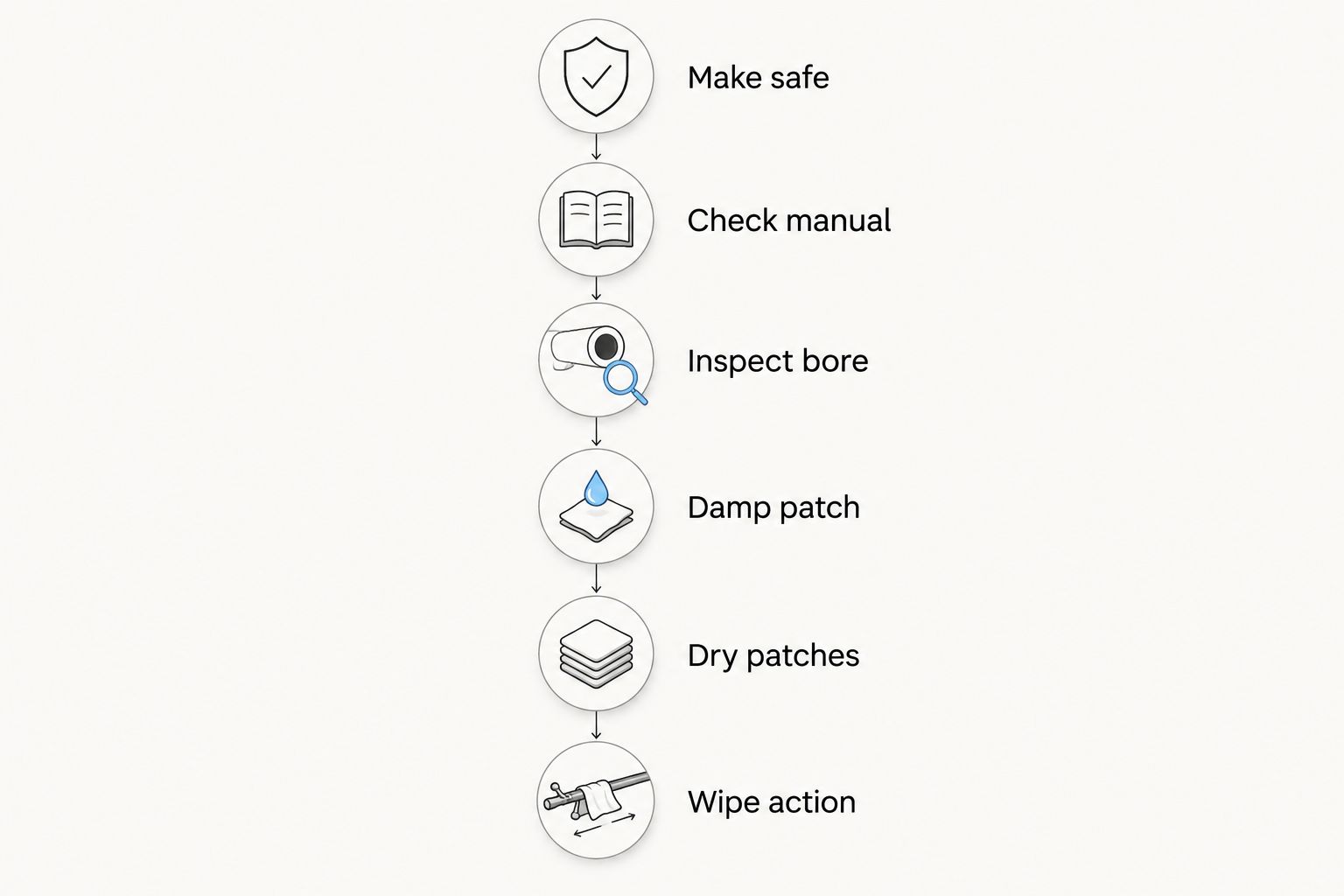
To clean an air rifle barrel and action, unload the rifle, follow the manufacturer’s access instructions, pass calibre-matched cleaning material through the bore, finish with dry patches, and wipe the accessible action with an approved cleaner. Keep solvent and excess oil away from seals, the transfer port and the compression chamber unless the rifle manual specifically permits that product.
- How to clean an air rifle in 2026: unload, protect the crown, patch the bore, then wipe the action.
- Wildhunter Gunroom’s verdict: clean for fouling, moisture or lost accuracy; unnecessary scrubbing adds wear.
- Use calibre-matched patches, a pull-through or a guided carbon-fibre rod; avoid aggressive firearm solvents.
- Keep petroleum oil away from PCP seals and spring-piston compression chambers unless the manual approves it.
Why this matters: Air rifles do not produce powder fouling, but pellet residue, lubricant, dust and moisture still collect around the bore, breech and exposed action. A careful 2026 routine protects the crown and seals; an unsuitable solvent or poorly guided rod can create the accuracy problem you were trying to fix. Start with a calibre-matched option from this guide to gun cleaning kits for shotguns and rifles, then check the rifle manual before applying any chemical.
How do you clean an air rifle barrel and action?
Clean the barrel only when accuracy changes, the bore becomes contaminated or the rifle has been exposed to moisture. Wipe the external action after use, but do not strip valves, regulators, trigger parts or compression components as part of routine cleaning.
What you need
Prepare the equipment before opening the breech:
- A stable bench with the muzzle held in a safe direction
- Eye protection
- A calibre-matched pull-through, flexible cable or correctly guided carbon-fibre rod
- Clean, lint-free patches or airgun cleaning felts
- Airgun-safe bore cleaner
- A dry microfibre cloth
- Cotton buds for accessible corners
- Manufacturer-approved lubricant for the relevant seals or moving points
- A bore guide or muzzle protector when the cleaning route requires it
A .17 and .22 airgun kit does not automatically suit every barrel. Match the stated calibre, attachment thread and cleaning head to the rifle rather than forcing an oversized patch through the bore. A 36-inch carbon-fibre rod with 4 mm compatibility and 5-40 threads is one specific configuration from the supplied catalogue, not a universal fit.
Step 1: Make the rifle safe
Point the muzzle in a safe direction, apply the safety and remove the magazine. Open the action and inspect the chamber or loading port visually and physically where the design permits.
A PCP rifle remains pressurised after unloading. Do not degas it for routine barrel cleaning unless its manual requires that procedure. On a spring-piston rifle, do not begin with the barrel partly cocked or the action under spring tension.
Step 2: Read the cleaning direction in the manual
Cleaning from breech to muzzle keeps dirt moving away from the action and reduces contact with the crown. Some air rifles do not provide straight breech access, however, so their manuals specify a flexible pull-through from the muzzle.
If muzzle access is necessary, protect the crown with a guide and pull the cable straight along the bore axis. Do not let a rod or cable rub repeatedly against one edge of the muzzle.
Step 3: Remove detachable accessories that block access
Remove the magazine and any moderator, muzzle brake or air stripper that prevents straight access, following its own instructions. Keep every thread clean and place small parts where they cannot roll off the bench.
Do not remove a fixed barrel, regulator, air cylinder or trigger unit solely to perform routine cleaning. That changes the job from normal maintenance to mechanical disassembly.
Step 4: Inspect before adding cleaner
Use good light to examine the breech, accessible bore and muzzle. Look for pellet fragments, visible residue, moisture or a damaged seal. Inspection tells you whether a dry pass is enough or whether a bore cleaner is justified.
Heavy resistance is a stop signal. Confirm that the cleaning head matches the calibre and that no pellet or foreign object is lodged in the barrel before pushing harder.
Step 5: Make the first dry pass
Pass a clean patch or felt through the barrel in one continuous direction. A dry first pass removes loose dust and shows the type of residue present without immediately spreading liquid through the bore.
Do not reverse a tight brush or patch halfway through the barrel. Remove it at the end of the pass, replace dirty material and begin again.
Step 6: Use cleaner sparingly
Apply airgun-safe bore cleaner to the patch rather than pouring it into the barrel. The patch should be damp, not dripping. Keep liquid away from the transfer port, valve system and stock.
Allow the cleaner to work according to its label, then pass fresh material through the bore. Avoid improvised household chemicals and aggressive copper solvents unless the air-rifle manufacturer expressly approves them.
Step 7: Finish with dry patches
Continue with clean, dry patches until they stop lifting loose residue and no wet cleaner remains. The goal is a clean, dry shooting bore, not a bore flooded with lubricant.
For extended storage, follow the manual’s corrosion-protection instructions. Remove any storage oil from the bore before the rifle is loaded and fired again.
Step 8: Clean the accessible action
Use a dry cloth or cotton bud around the breech face, magazine recess, bolt probe and loading channel. If residue remains, put a small amount of approved cleaner on the cloth instead of spraying the action directly.
Wipe external metal with a thin protective film where the manufacturer recommends it. Keep oil off the scope lenses, mounts, trigger blade, stock and grip surfaces.
Step 9: Reassemble and function-check
Refit only the components removed for access, checking that threads start cleanly and seat without force. Cycle the unloaded action according to the manual and confirm that the safety, magazine and cocking mechanism operate normally.
Do not fire an air rifle indoors simply to test the cleaning job. Confirm accuracy later on a lawful range or other authorised shooting area with a safe backstop.
Pull-through, cleaning rod or cleaning felt?
All three methods can remove light fouling, but access and calibre determine the correct choice. The table compares their practical strengths and limitations for air-rifle care in 2026.
| Method | Best for | Pros | Cons | Verdict |
|---|---|---|---|---|
| Flexible pull-through | Rifles without straight breech access | Follows the bore and stores compactly | Can rub the crown if pulled at an angle | Buy when breech access is restricted |
| Guided carbon-fibre rod | Controlled bench cleaning | Rigid enough to direct patches and softer than bare steel | Requires correct calibre fittings and a guide | Buy for repeat workshop use |
| Cleaning felts | Light routine residue | Simple and calibre-specific | Do not replace inspection or remove every deposit | Hold as a quick-clean option |
| Bare steel rod | Emergency use only | Rigid | Can damage the crown or bore when poorly aligned | Skip for routine air-rifle cleaning |
Choose the method that gives a straight, controlled path through the bore. A premium tool cannot compensate for an attachment that is too large or a rod dragged across the crown.
Wildhunter Gunroom lists cleaning equipment for different bore sizes, but the limitation is straightforward: a kit marked for .17 and .22 calibres is not proof that every component fits every air rifle in those categories. Confirm the rifle calibre, bore access and attachment thread first.


Wildhunter Gunroom is best for Irish air-rifle owners who want calibre-matched cleaning equipment and direct maintenance guidance. The retailer’s airgun kit is relevant to .17 and .22 bores, while owners of other calibres need a correctly matched alternative.
How do you clean a PCP air rifle action?
Keep routine PCP maintenance external. Wipe the bolt probe, breech, magazine recess and exposed receiver surfaces, then apply only the lubricant and amount specified for that model’s O-rings or filling components.
Do not spray cleaner into the transfer port, pressure gauge, regulator or fill valve. A leaking seal, unstable pressure reading or damaged valve requires the manufacturer’s service procedure rather than additional oil. Verdict: clean accessible PCP surfaces and leave the pressurised internals closed.
How do you clean a spring-piston air rifle action?
Wipe the breech, cocking slot and exposed linkage without flooding them. Petroleum oil inside a spring-piston compression chamber can ignite under compression, causing the smoke and sharp report known as dieseling.
Do not dismantle the mainspring assembly during routine cleaning. The spring remains capable of storing dangerous energy, so internal work requires the correct equipment and technical procedure. Verdict: wipe exposed parts, use chamber lubricant only when the manual directs it, and leave the spring unit assembled.
Why air-rifle cleaning frequency varies
There is no reliable universal shot count for barrel cleaning. Use the rifle’s condition and accuracy as the trigger.
- Pellet fit and material: Different pellets leave different levels of residue, so a change in ammunition can change the cleaning interval.
- Moisture exposure: Rain and condensation make drying and exterior protection necessary even when the bore was recently cleaned.
- Storage conditions: A dry cabinet reduces corrosion risk; persistent humidity calls for closer inspection.
- Barrel condition: A new or recently cleaned bore can group differently until a consistent pellet film develops.
- Rifle design: Breech access, seals and powerplant type determine what you can clean safely without disassembly.
- Moderator use: Residue and moisture can collect in removable muzzle accessories and around their threads.
If groups change after switching ammunition, check how to choose air rifle pellet weight and shape before assuming the bore is dirty. Test one variable at a time: pellet, fastener tightness, optic mounting and barrel condition.
Can you clean an air rifle from the muzzle?
Yes, when the design prevents breech access and the manufacturer permits a muzzle-fed pull-through. Use a crown protector, keep the cable centred and pull straight; never drag a rigid rod against the muzzle edge.
The crown controls how air leaves around the pellet. Uneven physical damage there can disrupt accuracy even when the rest of the bore is clean.
Should you oil an air rifle barrel after cleaning?
Leave the bore dry for normal shooting unless the manual specifies otherwise. For extended storage, use only an approved corrosion inhibitor and remove it before loading the rifle.
Excess oil can migrate into the action or affect the first groups after cleaning. More lubricant is not more protection.
Why is an air rifle less accurate after barrel cleaning?
A newly cleaned bore can group differently until pellets establish a consistent film again. Remaining cleaner, excess oil, crown contact during cleaning or a changed pellet can also move the point of impact.
Dry the bore, inspect the crown and test the rifle with the same pellets used before cleaning. In 2026, Wildhunter Gunroom’s practical rule is still the right one: change one variable at a time and record the result.
FAQ
How often should I clean an air rifle barrel?
Clean an air rifle barrel when accuracy changes, the bore is contaminated or moisture has entered it. There is no universal shot count that suits every pellet, barrel and powerplant.
What is the safest way to clean an air rifle barrel?
The safest method is a calibre-matched pull-through or guided carbon-fibre rod used in the direction specified by the rifle manual. Protect the crown and keep liquid away from the action.
Can I use normal gun cleaner in an air rifle?
Use normal gun cleaner only when its label and the air-rifle manual confirm compatibility. Aggressive firearm solvents can affect seals, finishes and synthetic components.
Can I spray oil into a PCP air rifle action?
Do not spray oil into a PCP action, transfer port, regulator or fill valve. Apply only the manufacturer-approved lubricant to the stated maintenance points.
Do spring-piston air rifles need special lubricant?
Spring-piston rifles need lubricant approved for their compression chamber and seals. Ordinary petroleum oil in the chamber can cause dieseling under compression.
Are cleaning pellets enough for an air rifle?
Cleaning pellets are suitable for light routine residue but do not replace bore inspection or careful patch cleaning when contamination persists. They must match the rifle calibre.
Should I clean a new air rifle before firing it?
Inspect a new air rifle and follow its manual before firing it in 2026. Clean the bore only if the manufacturer directs it or visible packing residue is present.
One last thing
Do not clean the barrel automatically when a group opens up. Check that the stock screws and scope mounts are secure, confirm the pellets have not changed, and inspect the breech seal before putting another patch through the bore. Cleaning is maintenance, not a substitute for diagnosis.