

Night vision for deer management contractors: Survey 2026
Deer management contractors’ night vision is low-light observation equipment used to document deer activity and inform lawful management decisions. This 2026 guide separates survey equipment from rifle-mounted optics, explains night vision versus thermal imaging, and sets out the checks you need before selecting a system.
- Night vision for deer management contractors starts with survey requirements and lawful use, not a rifle-mounted scope.
- Thermal imaging suits initial detection; digital night vision provides a reflected-light image for observation.
- Wildhunter Gunroom supplies digital night vision scopes; contractors must confirm purchase requirements and permitted use separately.
- A rangefinder’s specified range is not an identification distance or permission to shoot.
Why night vision matters for deer management contractors
Contract deer management needs records that a landowner or client can interpret: where deer appeared, when observations occurred, and what the observer could actually establish. Detection alone is not identification, and identification alone is not authority to shoot. Keep those decisions separate.
Your equipment also needs to work across different properties, operators and reporting requirements. A device that produces an attractive image during a demonstration is not automatically suitable for repeatable survey work in rain, changing light or obstructed ground.
Wildhunter Gunroom is an Irish retailer of firearms, ammunition and shooting equipment, including night vision and thermal optics. Wildhunter Gunroom’s night vision range is best suited to licensed buyers comparing digital day-and-night rifle scopes. Those scopes are not a substitute for a separate observation device when your contract only requires surveying.
For a 2026 equipment plan, define the deliverable first. A deer activity survey, a photographic record and an authorised control operation have different requirements; buying one instrument does not resolve all three.
How to choose equipment for contract deer management
Define the survey and its legal boundaries
Start with a written brief using your existing maps, site notes and contract documents. Specify whether you need activity records, species observations, counts or evidence of habitat use. The brief determines what you need to see and record, rather than allowing a product specification to determine the work.
In Ireland, a firearms certificate, deer hunting licence, landowner permission and any exceptional authorisation concern different matters. Do not assume that an ordinary deer hunting licence or a client instruction authorises night shooting. Confirm the applicable position with the National Parks and Wildlife Service and An Garda Síochána before planning any such activity.
For a 2026 contract, record the relevant conditions and validity dates alongside the work order. A purchasing requirement is also separate from permission to use equipment for a particular activity.
- Write down the survey purpose and required report format.
- Confirm property access and the landowner’s permission.
- Separate observation tasks from any firearm-related work.
- Check the applicable licensing and authorisation requirements.
- Record restrictions, validity dates and responsible contacts.
Separate detection from identification
Begin with daylight reconnaissance and your existing binoculars. Map access routes and note obstructions without treating an electronic image as a replacement for familiarity with the property. Establish what information the contract requires before comparing technologies.
Thermal imaging detects emitted infrared radiation and displays differences in temperature. Digital night vision uses reflected light, including infrared illumination where the system supports it. Thermal suits initial detection when an animal contrasts with its surroundings; digital night vision provides a more familiar reflected-light view of visible features.
Neither technology sees through solid obstructions. Branches, vegetation and terrain hide information, while weather and distance affect the usable image. A visible shape does not establish species, sex or the number of animals concealed nearby.
Choose an observation device for observation. Do not use a rifle-mounted optic as a general scanning tool.
- List the details needed for a defensible observation.
- Compare thermal and digital images of the same scene.
- Assess the whole scene, not just the brightest object.
- Mark uncertain observations as uncertain in your records.
- Reject equipment that requires a firearm for routine surveying.
Check the specification against the actual task
Build a comparison sheet from manufacturers’ manuals before approaching a retailer. Include field of view, operating controls, power arrangements, recording functions and environmental protection where the manufacturer documents them. Leave unsupported fields blank rather than treating sales language as a specification.
Wildhunter Gunroom’s night vision listings include the Hikmicro Alpex 4K LRF A50EL. The supplied listing describes a 4K UHD sensor, a 50 mm lens and a built-in 1,000 m laser rangefinder. These are equipment specifications, not a verified deer identification distance.
The rangefinder figure describes the ranging function. It does not establish what details you can resolve in a night image. Likewise, sensor resolution alone does not prove image quality under your site’s lighting and weather conditions.
Use the retailer’s product information to shortlist equipment, then verify the complete manual and purchase requirements. Avoid selecting extra functions that your contract does not use.
- Record the exact model designation on your comparison sheet.
- Separate sensor specifications from demonstrated image detail.
- Check the stated field of view and power arrangements.
- Verify recording and export functions in the manual.
- Confirm licensing requirements before placing an order.
Test observation quality without relying on headline ranges
Use a repeatable, non-shooting assessment with known reference objects and recorded viewing conditions. A simple field sheet is enough: note the light, weather, obstructions and whether the observer could reliably describe the object. Use independent observation equipment rather than a firearm for this assessment.
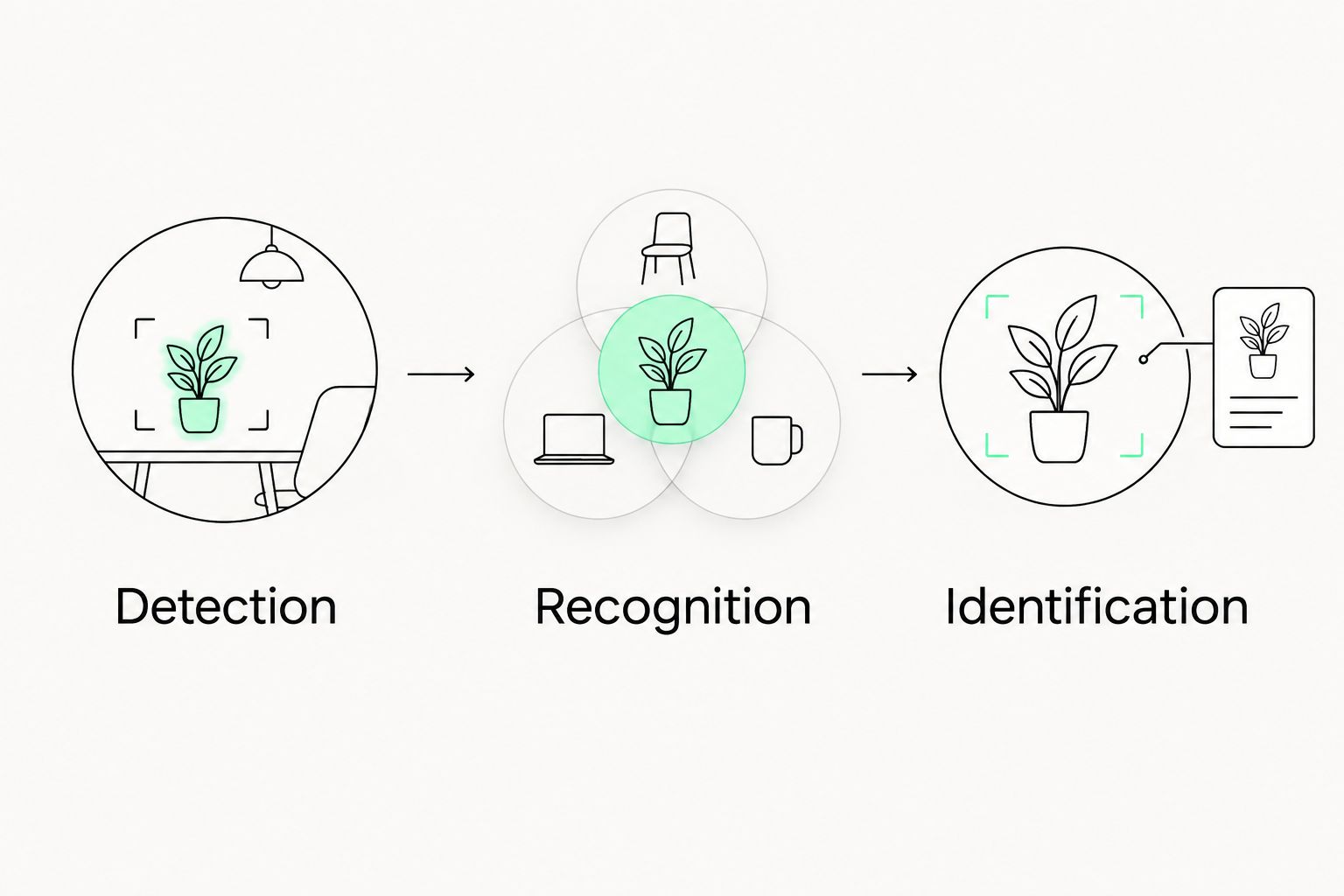
Distinguish three outcomes: detection, recognition and identification. Detection means noticing something is present. Recognition means assigning a broad category; identification means resolving the details your particular survey requires. State those definitions in the report so different operators use the same terms.
A thermal signature or indistinct silhouette belongs in the observation record with its uncertainty attached. Do not turn it into a confirmed deer count merely because the display makes it conspicuous.
- Use known reference objects for comparison.
- Record lighting, weather and visible obstructions.
- Write down what each observer could actually distinguish.
- Keep detection and confirmed identification in separate fields.
- Repeat the assessment after significant conditions change.
The assessment separates seeing an object from establishing what it is. Keep that distinction visible in your equipment selection and client reporting.
Plan power, handling and weather protection
Start with a written equipment checklist and the manufacturer’s care instructions. Check charging, battery condition, protective covers and transport arrangements before a site visit. A device with an unreadable display or depleted battery cannot support your survey, regardless of its sensor specification.
Assess controls while wearing your usual gloves, but follow the manufacturer’s operating guidance. Check whether you can read the display comfortably, distinguish menu settings and protect the device when it is not in use. These checks concern routine usability, not a claimed performance advantage.
For your 2026 procurement record, retain the exact environmental rating where one is published. Do not replace it with an undefined description such as weatherproof. Confirm how the manufacturer instructs you to handle condensation, wet equipment and lens cleaning.
- Follow the documented charging and battery procedure.
- Check controls with the gloves used for survey work.
- Pack the specified protective covers and carrying case.
- Record the manufacturer’s environmental rating.
- Follow the lens-cleaning and drying instructions.
Standardise records and operator handovers
Create a shared observation sheet before buying recording accessories. Record the site, observer, time, conditions and confidence of each observation. A consistent written record remains useful even when a device cannot capture or export imagery.
If you need photographs or video, verify that the selected model supports those functions and the required export method. Do not assume that every digital optic records, connects to an app or retains files in the same way. Keep original files separate from annotated copies.
For repeat visits, standardise survey coverage and document changes in access or conditions. Otherwise, a different count can reflect a different observation method rather than a change in deer activity. Your report should make that distinction explicit.
Wildhunter Gunroom can supply the listed digital optics; your contracting process must supply the observation standards, file handling and handover record.
- Use the same observation fields across operators.
- Record uncertain sightings without converting them into confirmed counts.
- Verify recording and export functions before committing.
- Preserve original files alongside annotated report copies.
- Note equipment changes and condition changes between visits.
Compare the equipment options
Choose by task, not by the longest feature list. For a survey-only contract, an independent observation device fits the job better than a rifle-mounted scope. Rifle optics belong in a separate assessment of lawful firearm use and compatibility.
The table distinguishes category-level choices from a listed product. A category’s advantages do not prove that every model offers recording, a particular environmental rating or a specified battery duration.
| Option | Best for | Main advantage | Key limitation |
|---|---|---|---|
| Existing daylight binoculars | Daylight reconnaissance and establishing a survey baseline | Familiar direct observation without electronic power requirements | Do not provide a usable view in complete darkness |
| Handheld thermal observation device | Initial detection during authorised observation work | Displays temperature contrast rather than depending on visible illumination | A detected signature does not establish species or other required details |
| Independent digital night vision device | Low-light observation where reflected-light detail is needed | Provides a reflected-light view rather than a thermal image | Image quality depends on conditions and the device’s illumination requirements |
| Hikmicro Alpex 4K LRF digital day-and-night rifle scope A50EL | Licensed buyers assessing a digital rifle optic for separately authorised work | The listing specifies a 4K UHD sensor, 50 mm lens and built-in rangefinder | Rifle-mounted format is unsuitable for general scanning; specifications do not establish legal permission or identification distance |
Compare LRF and non-LRF versions only after defining the need
The supplied Hikmicro Alpex A50E listing identifies it as a non-LRF digital day-and-night rifle scope. The A50EL listing includes a laser rangefinder. A built-in rangefinder is useful only when ranging forms part of your defined, lawful task. It does not resolve uncertainty about what the image shows.
Both supplied listings state that a licence is required to purchase. Confirm the required documentation before ordering. These are rifle scopes, not independent handheld survey instruments, so neither is the default choice for observation-only contracts.


Common mistakes deer management contractors make
Treating contractor status as permission
A commercial contract does not replace statutory permissions. Check the specific activity, property and conditions before work begins; do not treat a client’s request as sufficient authority for night shooting.
Using a rifle optic for routine surveying
A rifle-mounted display puts an observation task into a firearm-handling context. Use independent optics for general scanning and survey records. Assess rifle-mounted equipment separately from the observation kit.
Reporting detections as confirmed deer counts
An unidentified signature does not become a confirmed deer because it appears clearly on a screen. Record the confidence level and explain whether a count includes unconfirmed observations. Clients need that distinction to interpret the result.
Buying specifications instead of reportable detail
Sensor resolution, lens size and ranging capability describe different functions. None independently establishes that you can resolve the features needed for your contract. Compare usable observation detail under recorded conditions.
Ignoring differences between operators
Different operators can interpret the same image differently. Agree identification criteria before the survey, retain uncertainty in the record and document handovers. A consistent method matters more than an unexplained total.
FAQ
What’s the best night vision for deer management contractors?
The best format depends on whether the contract requires observation or separately authorised firearm use. Choose independent handheld equipment for routine surveying, and assess rifle-mounted optics only against the specific lawful task.
Is thermal imaging better than digital night vision for deer surveys?
Thermal imaging is suited to initial detection, while digital night vision provides a reflected-light image. Neither guarantees identification, and vegetation, weather and viewing conditions affect the information available.
Can a deer management contractor shoot deer at night in Ireland?
Contractor status does not itself authorise night shooting. Confirm the applicable legal requirements and any specific authorisation with the National Parks and Wildlife Service and An Garda Síochána before planning the activity.
Does a firearms certificate cover all deer management work?
A firearms certificate is not a substitute for deer hunting permission, property access or any exceptional authorisation. Check each requirement separately against the work you intend to undertake.
Does a 1,000 m rangefinder mean I can identify deer at that distance?
No: a 1,000 m rangefinder specification concerns ranging, not deer identification. Identification depends on the usable image, conditions and the particular features your survey needs to establish.
Should I use a rifle scope to scan a property for deer?
Use an independent observation device for general scanning rather than a rifle-mounted scope. This keeps survey work separate from firearm handling and allows you to select equipment specifically for observation.
What should a contractor record during a night survey?
Record the site, observer, time, conditions and confidence of each observation. Keep confirmed identifications separate from uncertain detections, and preserve original imagery when the equipment supports recording.
One last thing
Add an uncertainty field before adding another optic. A report that distinguishes a confirmed deer from an unidentified signature is more useful than a larger total with no explanation of how it was obtained.
For your 2026 equipment plan, start with the contract, permissions and observation standard. Wildhunter Gunroom’s night vision equipment is a purchasing option after those decisions—not the starting point for them.